-
 Crazygames 2024
-
 Feminization Games
-
 FNAF Unblocked
-
 Play With Friends
-
 Geometry Dash Unblocked
-
 Google Sites Unblocked
-
 GTA Unblocked
-
 Horror Unblocked
-
 Minecraft Unblocked
-
 1v1.LOL
-
 2 Player
-
 ABCya
ABCya
-
 Action
-
 Adventure
-
 Amanda The Adventurer
-
 Among Us
-
 Backrooms
-
 Baldi’s Basics
-
 Bamboozle
-
 Barbie
-
 BeamNG Drive
-
 Best
Best
-
 BitLife
-
 Bleach vs Naruto
-
 Chess
Chess
-
 Chilla's Art
-
 Choo Choo Charles
-
 Creepypasta
-
 Doraemon
-
 DOS
DOS
-
 Driving
-
 Easymath
-
 Evil Nun
-
 Fancade
-
 Farming Simulator
-
 Fighting
-
 FNaF
FNaF
-
 Friday Night Funkin
-
 Friv
Friv
-
 Gacha Life
-
 For Boys
-
 For Girls
-
 For Kids
-
 Garry’s Mod
-
 Garten of Banban
-
 Genshin Impact
-
 Goat Simulator
-
 Granny
-
 GTA
GTA
-
 Happy Wheels
-
 Hello Neighbor
-
 Horror
-
 Hungry Shark
-
 Incredibox
-
 Incredibox Scratch
-
 Indie
Indie
-
 IO Games
-
 Itch.io
-
 Japanese Horror
-
 Jump Force Mugen
-
 Kogama
-
 Lagged
-
 Mahjong
-
 Medical Doctor
-
 Melon Playground
-
 Minecraft
-
 Multiplayer
-
 Multiplayer Unblocked
-
 My Singing Monsters
-
 Nintendo
-
 Old Games
-
 Papa's
-
 PK XD
PK XD
-
 Poki
Poki
-
 Poppy Playtime
-
 Purble Place
-
 Puzzle
-
 Racing
-
 Rainbow Friends
-
 Red Ball
-
 Retro Bowl
-
 Roblox
-
 Sakura School Simulator
-
 Shooting
-
 Skibidi Toilet
-
 Snowmobile
-
 Solar Smash
-
 Sports
-
 Stickman
-
 Summertime Saga
-
 Supermarket Simulator
-
 Survival
-
 Talking Angela
-
 Talking Ben
-
 Talking Tom
-
 That's not my Neighbor
-
 The Amazing Digital Circus
-
 The Baby In Yellow
-
 Play The Pizza Edition Games Online
-
 The Sims
-
 Toca Boca
-
 Toca Life
-
 Touchdown
-
 Unblocked 6969
-
 Play Wobbly Life Games
-
 Retro Unblocked
-
 Sprunki Games
-
 Sprunki Wenda Treatment Games
-
 Stickman Unblocked
-
 Suika Games Online
-
 Unblocked 2024
-
 Unblocked Games 66
-
 Unblocked Games 76
-
 Unblocked Games 77
-
 Unblocked Games at School
-
 Unblocked Games Premium
-
 Unblocked Games World



Advertisement
A Nostalgic Hangout Game
Advertisement

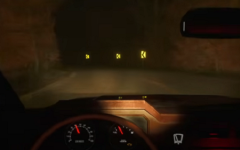
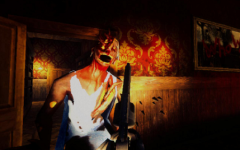
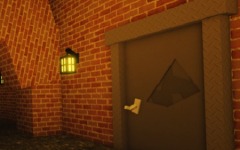
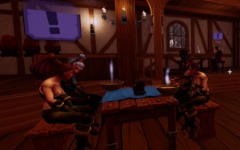
In A Nostalgic Hangout Game, the player is placed inside a small Roblox environment that initially resembles a typical social space. There are no clear instructions, tasks, or goals provided at the start. The setting appears stable, with familiar objects and simple interactions, but this stability does not last. Over time, the player begins to notice irregularities in how the world behaves. The experience shifts from passive presence to active observation, where attention becomes the main tool for progression.
Absence Of Direction
Unlike traditional games, there is no structured path to follow. The player moves freely through the environment, interacting only when necessary. There are no prompts or indicators that explain what should be done next.
This lack of direction changes how the experience is approached. Instead of completing objectives, the player observes patterns and differences. Progress depends on noticing what has changed rather than triggering scripted events.
Gradual Distortion Of Space
As the session continues, the environment becomes less predictable. Objects may shift, certain areas may feel altered, and previously stable elements begin to behave differently. These changes are subtle at first, which makes them easy to overlook.
There is no direct explanation for these distortions. The player must compare moments and interpret what is happening. The world itself becomes a form of communication, replacing dialogue or explicit storytelling.
Key Gameplay Elements
The structure of the experience is based on several core ideas:
- Free movement without defined objectives
- Environmental changes that occur over time
- Minimal interaction with objects
- Lack of direct narrative explanation
- Player-driven observation and interpretation
These aspects define how the game is experienced.
Evolving Player Perception
The design encourages multiple playthroughs, as not all details are immediately noticeable. Returning to the environment allows the player to focus on elements that were previously ignored.
Replay value is tied to understanding rather than discovery. With each session, the player builds a clearer view of how the environment behaves. The mechanics remain unchanged, but perception evolves, making later experiences more structured and intentional.