-
 Crazygames 2024
-
 Feminization Games
-
 FNAF Unblocked
-
 Play With Friends
-
 Geometry Dash Unblocked
-
 Google Sites Unblocked
-
 GTA Unblocked
-
 Horror Unblocked
-
 Minecraft Unblocked
-
 1v1.LOL
-
 2 Player
-
 ABCya
ABCya
-
 Action
-
 Adventure
-
 Amanda The Adventurer
-
 Among Us
-
 Backrooms
-
 Baldi’s Basics
-
 Bamboozle
-
 Barbie
-
 BeamNG Drive
-
 Best
Best
-
 BitLife
-
 Bleach vs Naruto
-
 Chess
Chess
-
 Chilla's Art
-
 Choo Choo Charles
-
 Creepypasta
-
 Doraemon
-
 DOS
DOS
-
 Driving
-
 Easymath
-
 Evil Nun
-
 Fancade
-
 Farming Simulator
-
 Fighting
-
 FNaF
FNaF
-
 Friday Night Funkin
-
 Friv
Friv
-
 Gacha Life
-
 For Boys
-
 For Girls
-
 For Kids
-
 Garry’s Mod
-
 Garten of Banban
-
 Genshin Impact
-
 Goat Simulator
-
 Granny
-
 GTA
GTA
-
 Happy Wheels
-
 Hello Neighbor
-
 Horror
-
 Hungry Shark
-
 Incredibox
-
 Incredibox Scratch
-
 Indie
Indie
-
 IO Games
-
 Itch.io
-
 Japanese Horror
-
 Jump Force Mugen
-
 Kogama
-
 Lagged
-
 Mahjong
-
 Medical Doctor
-
 Melon Playground
-
 Minecraft
-
 Multiplayer
-
 Multiplayer Unblocked
-
 My Singing Monsters
-
 Nintendo
-
 Old Games
-
 Papa's
-
 PK XD
PK XD
-
 Poki
Poki
-
 Poppy Playtime
-
 Purble Place
-
 Puzzle
-
 Racing
-
 Rainbow Friends
-
 Red Ball
-
 Retro Bowl
-
 Roblox
-
 Sakura School Simulator
-
 Shooting
-
 Skibidi Toilet
-
 Snowmobile
-
 Solar Smash
-
 Sports
-
 Stickman
-
 Summertime Saga
-
 Supermarket Simulator
-
 Survival
-
 Talking Angela
-
 Talking Ben
-
 Talking Tom
-
 That's not my Neighbor
-
 The Amazing Digital Circus
-
 The Baby In Yellow
-
 Play The Pizza Edition Games Online
-
 The Sims
-
 Toca Boca
-
 Toca Life
-
 Touchdown
-
 Unblocked 6969
-
 Play Wobbly Life Games
-
 Retro Unblocked
-
 Sprunki Games
-
 Sprunki Wenda Treatment Games
-
 Stickman Unblocked
-
 Suika Games Online
-
 Unblocked 2024
-
 Unblocked Games 66
-
 Unblocked Games 76
-
 Unblocked Games 77
-
 Unblocked Games at School
-
 Unblocked Games Premium
-
 Unblocked Games World




Advertisement
Plushy’s Playground
Advertisement
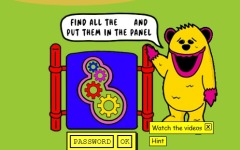
Plushy’s Playground presents an interactive experience that unfolds inside a fictional website rather than a traditional game world. The player navigates through pages, menus, and embedded media, starting with content that appears simple and consistent. There are no stated goals, and the system does not explain how to progress. Instead, the experience depends on how the player explores and what they notice while interacting with the interface. Over time, small inconsistencies begin to appear, suggesting that the structure is not as stable as it first seems.
Interface As The Environment
All interaction takes place within a digital layout that replaces physical movement. The player opens sections, clicks on elements, and returns to previously visited pages. This creates a loop where navigation itself becomes the main activity.
There is no clear indication that actions are correct or incorrect. Some responses are immediate, while others only appear after repeated interaction. Because of this, the player must rely on observation to understand how different parts of the system connect.
Gradual Breakdown Of Consistency
As the session progresses, the platform begins to lose its initial consistency. Certain elements may change appearance, behave differently, or stop functioning as expected. These changes are introduced slowly, making them difficult to identify without careful comparison.
The experience does not provide explanations for these shifts. Instead, it relies on contrast between earlier and later states. The player is expected to interpret what has changed and consider how those changes affect the overall structure.
Key Gameplay Elements
The experience is defined by several core aspects:
- Navigation through a simulated online platform
- Interaction based on clicking and revisiting content
- Lack of explicit instructions or objectives
- Subtle changes in visual and structural elements
- Indirect narrative delivered through inconsistencies
These aspects determine how the system is explored.
Repetition And Interpretation
The design supports multiple playthroughs because not all details are immediately visible. Players often return to the interface to confirm observations or test different interaction patterns. Each session can reveal additional connections between elements.
Replay value is tied to interpretation rather than new mechanics. As familiarity increases, the player begins to recognize how the system reacts and what triggers certain changes. The structure remains the same, but understanding becomes more precise with repeated interaction.