-
 Crazygames 2024
-
 Feminization Games
-
 FNAF Unblocked
-
 Play With Friends
-
 Geometry Dash Unblocked
-
 Google Sites Unblocked
-
 GTA Unblocked
-
 Horror Unblocked
-
 Minecraft Unblocked
-
 1v1.LOL
-
 2 Player
-
 ABCya
ABCya
-
 Action
-
 Adventure
-
 Amanda The Adventurer
-
 Among Us
-
 Backrooms
-
 Baldi’s Basics
-
 Bamboozle
-
 Barbie
-
 BeamNG Drive
-
 Best
Best
-
 BitLife
-
 Bleach vs Naruto
-
 Chess
Chess
-
 Chilla's Art
-
 Choo Choo Charles
-
 Creepypasta
-
 Doraemon
-
 DOS
DOS
-
 Driving
-
 Easymath
-
 Evil Nun
-
 Fancade
-
 Farming Simulator
-
 Fighting
-
 FNaF
FNaF
-
 Friday Night Funkin
-
 Friv
Friv
-
 Gacha Life
-
 For Boys
-
 For Girls
-
 For Kids
-
 Garry’s Mod
-
 Garten of Banban
-
 Genshin Impact
-
 Goat Simulator
-
 Granny
-
 GTA
GTA
-
 Happy Wheels
-
 Hello Neighbor
-
 Horror
-
 Hungry Shark
-
 Incredibox
-
 Incredibox Scratch
-
 Indie
Indie
-
 IO Games
-
 Itch.io
-
 Japanese Horror
-
 Jump Force Mugen
-
 Kogama
-
 Lagged
-
 Mahjong
-
 Medical Doctor
-
 Melon Playground
-
 Minecraft
-
 Multiplayer
-
 Multiplayer Unblocked
-
 My Singing Monsters
-
 Nintendo
-
 Old Games
-
 Papa's
-
 PK XD
PK XD
-
 Poki
Poki
-
 Poppy Playtime
-
 Purble Place
-
 Puzzle
-
 Racing
-
 Rainbow Friends
-
 Red Ball
-
 Retro Bowl
-
 Roblox
-
 Sakura School Simulator
-
 Shooting
-
 Skibidi Toilet
-
 Snowmobile
-
 Solar Smash
-
 Sports
-
 Stickman
-
 Summertime Saga
-
 Supermarket Simulator
-
 Survival
-
 Talking Angela
-
 Talking Ben
-
 Talking Tom
-
 That's not my Neighbor
-
 The Amazing Digital Circus
-
 The Baby In Yellow
-
 Play The Pizza Edition Games Online
-
 The Sims
-
 Toca Boca
-
 Toca Life
-
 Touchdown
-
 Unblocked 6969
-
 Play Wobbly Life Games
-
 Retro Unblocked
-
 Sprunki Games
-
 Sprunki Wenda Treatment Games
-
 Stickman Unblocked
-
 Suika Games Online
-
 Unblocked 2024
-
 Unblocked Games 66
-
 Unblocked Games 76
-
 Unblocked Games 77
-
 Unblocked Games at School
-
 Unblocked Games Premium
-
 Unblocked Games World



Advertisement
Meteor 60 Seconds
Advertisement
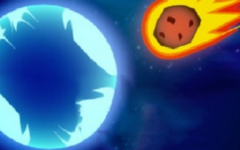
Meteor 60 Seconds is a short interactive game built around a fixed time limit, where the player has exactly one minute to act before an unavoidable global event occurs. The scenario begins with a notification about an incoming meteor, after which control is given to the player in an open city environment. The objective is not to prevent the event, but to decide how to spend the remaining time. The structure is simple and focuses on immediate decision-making under strict constraints.
Core Gameplay And Time Limit
The main mechanic is the countdown timer that runs continuously from the moment the game begins. Players can move freely through the environment and interact with objects or characters. Each action consumes part of the limited time, forcing the player to prioritize decisions. There is no way to extend the timer, so every interaction must be chosen carefully. The system creates a situation where speed and planning directly influence the outcome.
Player Choices And Interaction
The player is presented with multiple possible actions, ranging from interacting with people to performing specific tasks within the environment. Some actions trigger short sequences, while others affect how the final result is interpreted. The game does not provide clear guidance on what actions are optimal, encouraging experimentation. Different choices lead to different endings, each reflecting how the player used the available time.
The main gameplay loop includes:
- moving through the environment within a time limit
- interacting with characters and objects
- choosing actions based on available time
- triggering events that affect outcomes
- reaching one of multiple endings
Systems And Outcome Evaluation
At the end of the 60-second period, the game evaluates the player’s actions and presents a result. This evaluation is based on what was done during the session rather than how efficiently time was used. The outcome is delivered through a summary that reflects the sequence of decisions made. There are multiple possible endings, each tied to specific actions or combinations of actions performed during the countdown.
Replayability And Structure
Meteor 60 Seconds is designed for repeated playthroughs due to its short duration and branching outcomes. Players can restart immediately and try different actions to see alternative results. It is not possible to complete all possible interactions in one run, which encourages multiple attempts. The structure supports experimentation, where each session focuses on exploring a different set of choices.