-
 Crazygames 2024
-
 Feminization Games
-
 FNAF Unblocked
-
 Play With Friends
-
 Geometry Dash Unblocked
-
 Google Sites Unblocked
-
 GTA Unblocked
-
 Horror Unblocked
-
 Minecraft Unblocked
-
 1v1.LOL
-
 2 Player
-
 ABCya
ABCya
-
 Action
-
 Adventure
-
 Amanda The Adventurer
-
 Among Us
-
 Backrooms
-
 Baldi’s Basics
-
 Bamboozle
-
 Barbie
-
 BeamNG Drive
-
 Best
Best
-
 BitLife
-
 Bleach vs Naruto
-
 Chess
Chess
-
 Chilla's Art
-
 Choo Choo Charles
-
 Creepypasta
-
 Doraemon
-
 DOS
DOS
-
 Driving
-
 Easymath
-
 Evil Nun
-
 Fancade
-
 Farming Simulator
-
 Fighting
-
 FNaF
FNaF
-
 Friday Night Funkin
-
 Friv
Friv
-
 Gacha Life
-
 For Boys
-
 For Girls
-
 For Kids
-
 Garry’s Mod
-
 Garten of Banban
-
 Genshin Impact
-
 Goat Simulator
-
 Granny
-
 GTA
GTA
-
 Happy Wheels
-
 Hello Neighbor
-
 Horror
-
 Hungry Shark
-
 Incredibox
-
 Incredibox Scratch
-
 Indie
Indie
-
 IO Games
-
 Itch.io
-
 Japanese Horror
-
 Jump Force Mugen
-
 Kogama
-
 Lagged
-
 Mahjong
-
 Medical Doctor
-
 Melon Playground
-
 Minecraft
-
 Multiplayer
-
 Multiplayer Unblocked
-
 My Singing Monsters
-
 Nintendo
-
 Old Games
-
 Papa's
-
 PK XD
PK XD
-
 Poki
Poki
-
 Poppy Playtime
-
 Purble Place
-
 Puzzle
-
 Racing
-
 Rainbow Friends
-
 Red Ball
-
 Retro Bowl
-
 Roblox
-
 Sakura School Simulator
-
 Shooting
-
 Skibidi Toilet
-
 Snowmobile
-
 Solar Smash
-
 Sports
-
 Stickman
-
 Summertime Saga
-
 Supermarket Simulator
-
 Survival
-
 Talking Angela
-
 Talking Ben
-
 Talking Tom
-
 That's not my Neighbor
-
 The Amazing Digital Circus
-
 The Baby In Yellow
-
 Play The Pizza Edition Games Online
-
 The Sims
-
 Toca Boca
-
 Toca Life
-
 Touchdown
-
 Unblocked 6969
-
 Play Wobbly Life Games
-
 Retro Unblocked
-
 Sprunki Games
-
 Sprunki Wenda Treatment Games
-
 Stickman Unblocked
-
 Suika Games Online
-
 Unblocked 2024
-
 Unblocked Games 66
-
 Unblocked Games 76
-
 Unblocked Games 77
-
 Unblocked Games at School
-
 Unblocked Games Premium
-
 Unblocked Games World




Advertisement
The Floor Above
Advertisement

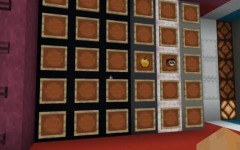
The Floor Above is a compact horror game built around repetition, controlled perspective, and anomaly detection. The player remains in a fixed indoor location where each cycle presents a slightly altered version of the same space. The objective is to determine whether the current scene is normal or contains a deviation. The game avoids complex mechanics and focuses on visual consistency and decision accuracy.
Core Interaction Model
Gameplay is structured as a repeated evaluation process. The player observes the room and selects one of two outcomes: proceed if the environment is unchanged or reject the cycle if an anomaly is present. Each decision affects progression, creating a linear sequence that simulates moving upward through floors. Errors interrupt this sequence and force the player to restart or lose progress.
The design emphasizes memory and comparison. Because the layout remains largely identical, the player must track small differences between cycles. These differences may include object placement, lighting changes, or unexpected elements. The absence of movement mechanics ensures that attention remains focused on the environment itself rather than navigation.
Gameplay Elements
The Floor Above introduces structured components that define its loop and difficulty curve:
- Repeating environment with controlled variations
- Binary decision system tied to progression
- Increasing number of anomaly types over time
- Reset conditions triggered by incorrect choices
- Visual and audio cues that require interpretation
Progression And Difficulty
The game increases complexity by reducing the visibility of anomalies and introducing misleading details. Early stages present clear differences, while later stages rely on subtle or indirect changes. This progression requires the player to refine observation skills and maintain consistency over longer sequences.
The pacing remains steady, with each cycle lasting only a short time. However, the cumulative effect of repeated decisions creates tension, as a single mistake can negate previous progress. This structure encourages careful analysis rather than fast reactions.
Minimalist Design Approach
The Floor Above uses a restricted control scheme and a static viewpoint to reduce mechanical complexity. The player does not explore freely and cannot interact with most objects. Instead, the game relies on perception, pattern recognition, and attention to detail. This approach differentiates it from traditional horror games by replacing action with observation as the primary challenge.