-
 Crazygames 2024
-
 Feminization Games
-
 FNAF Unblocked
-
 Play With Friends
-
 Geometry Dash Unblocked
-
 Google Sites Unblocked
-
 GTA Unblocked
-
 Horror Unblocked
-
 Minecraft Unblocked
-
 1v1.LOL
-
 2 Player
-
 ABCya
ABCya
-
 Action
-
 Adventure
-
 Amanda The Adventurer
-
 Among Us
-
 Backrooms
-
 Baldi’s Basics
-
 Bamboozle
-
 Barbie
-
 BeamNG Drive
-
 Best
Best
-
 BitLife
-
 Bleach vs Naruto
-
 Chess
Chess
-
 Chilla's Art
-
 Choo Choo Charles
-
 Creepypasta
-
 Doraemon
-
 DOS
DOS
-
 Driving
-
 Easymath
-
 Evil Nun
-
 Fancade
-
 Farming Simulator
-
 Fighting
-
 FNaF
FNaF
-
 Friday Night Funkin
-
 Friv
Friv
-
 Gacha Life
-
 For Boys
-
 For Girls
-
 For Kids
-
 Garry’s Mod
-
 Garten of Banban
-
 Genshin Impact
-
 Goat Simulator
-
 Granny
-
 GTA
GTA
-
 Happy Wheels
-
 Hello Neighbor
-
 Horror
-
 Hungry Shark
-
 Incredibox
-
 Incredibox Scratch
-
 Indie
Indie
-
 IO Games
-
 Itch.io
-
 Japanese Horror
-
 Jump Force Mugen
-
 Kogama
-
 Lagged
-
 Mahjong
-
 Medical Doctor
-
 Melon Playground
-
 Minecraft
-
 Multiplayer
-
 Multiplayer Unblocked
-
 My Singing Monsters
-
 Nintendo
-
 Old Games
-
 Papa's
-
 PK XD
PK XD
-
 Poki
Poki
-
 Poppy Playtime
-
 Purble Place
-
 Puzzle
-
 Racing
-
 Rainbow Friends
-
 Red Ball
-
 Retro Bowl
-
 Roblox
-
 Sakura School Simulator
-
 Shooting
-
 Skibidi Toilet
-
 Snowmobile
-
 Solar Smash
-
 Sports
-
 Stickman
-
 Summertime Saga
-
 Supermarket Simulator
-
 Survival
-
 Talking Angela
-
 Talking Ben
-
 Talking Tom
-
 That's not my Neighbor
-
 The Amazing Digital Circus
-
 The Baby In Yellow
-
 Play The Pizza Edition Games Online
-
 The Sims
-
 Toca Boca
-
 Toca Life
-
 Touchdown
-
 Unblocked 6969
-
 Play Wobbly Life Games
-
 Retro Unblocked
-
 Sprunki Games
-
 Sprunki Wenda Treatment Games
-
 Stickman Unblocked
-
 Suika Games Online
-
 Unblocked 2024
-
 Unblocked Games 66
-
 Unblocked Games 76
-
 Unblocked Games 77
-
 Unblocked Games at School
-
 Unblocked Games Premium
-
 Unblocked Games World


Advertisement
Sorry Bob
Advertisement
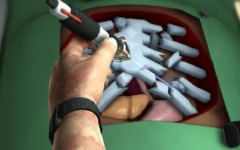
Sorry Bob is a physics-based surgery simulation game where the player performs operations using unstable controls and unpredictable tools. The player takes the role of an unqualified character tasked with keeping a patient alive during a series of procedures. The gameplay is presented from a first-person perspective, focusing entirely on manipulating a single hand above the operating table. Progression depends on completing surgical objectives before the patient’s condition reaches failure.
Core Gameplay And Control System
The main mechanic is based on controlling each finger of the hand individually. Different keys are assigned to separate fingers, while the mouse controls overall hand movement and rotation. This creates a system where even simple actions require coordination. Picking up tools, positioning them, and performing precise movements becomes difficult due to the lack of stability. The challenge comes from adapting to the control scheme rather than understanding medical procedures.
Objectives And Surgical Tasks
Each level presents a specific objective, usually involving removing and replacing organs within a limited time. The player must break open the chest, extract damaged parts, and insert new ones correctly. Blood loss acts as a constant pressure mechanic, forcing the player to work efficiently while avoiding mistakes. Incorrect movements or dropped tools can quickly lead to failure, making careful execution essential.
The main gameplay loop includes:
- controlling individual fingers to move the hand
- picking up and using surgical tools
- removing and replacing organs
- managing time and patient health
- retrying operations to improve precision
Physics And Interaction Mechanics
The game relies heavily on physics simulation. Tools react to movement with inertia, often slipping or rotating unpredictably. The operating table becomes difficult to manage as objects shift position after each interaction. Even small errors can cause major disruptions, such as dropping instruments or damaging the patient. This system forces players to slow down and adjust movements carefully instead of relying on fast actions.
Progression And Replayability
Sorry Bob is structured around short sessions where players attempt to complete operations more effectively over time. Success unlocks additional challenges with increased difficulty and more complex scenarios. Replayability comes from mastering the control system and improving consistency. Since failure is common, each attempt helps refine coordination and understanding of how tools behave.