-
 Crazygames 2024
-
 Feminization Games
-
 FNAF Unblocked
-
 Play With Friends
-
 Geometry Dash Unblocked
-
 Google Sites Unblocked
-
 GTA Unblocked
-
 Horror Unblocked
-
 Minecraft Unblocked
-
 1v1.LOL
-
 2 Player
-
 ABCya
ABCya
-
 Action
-
 Adventure
-
 Amanda The Adventurer
-
 Among Us
-
 Backrooms
-
 Baldi’s Basics
-
 Bamboozle
-
 Barbie
-
 BeamNG Drive
-
 Best
Best
-
 BitLife
-
 Bleach vs Naruto
-
 Chess
Chess
-
 Chilla's Art
-
 Choo Choo Charles
-
 Creepypasta
-
 Doraemon
-
 DOS
DOS
-
 Driving
-
 Easymath
-
 Evil Nun
-
 Fancade
-
 Farming Simulator
-
 Fighting
-
 FNaF
FNaF
-
 Friday Night Funkin
-
 Friv
Friv
-
 Gacha Life
-
 For Boys
-
 For Girls
-
 For Kids
-
 Garry’s Mod
-
 Garten of Banban
-
 Genshin Impact
-
 Goat Simulator
-
 Granny
-
 GTA
GTA
-
 Happy Wheels
-
 Hello Neighbor
-
 Horror
-
 Hungry Shark
-
 Incredibox
-
 Incredibox Scratch
-
 Indie
Indie
-
 IO Games
-
 Itch.io
-
 Japanese Horror
-
 Jump Force Mugen
-
 Kogama
-
 Lagged
-
 Mahjong
-
 Medical Doctor
-
 Melon Playground
-
 Minecraft
-
 Multiplayer
-
 Multiplayer Unblocked
-
 My Singing Monsters
-
 Nintendo
-
 Old Games
-
 Papa's
-
 PK XD
PK XD
-
 Poki
Poki
-
 Poppy Playtime
-
 Purble Place
-
 Puzzle
-
 Racing
-
 Rainbow Friends
-
 Red Ball
-
 Retro Bowl
-
 Roblox
-
 Sakura School Simulator
-
 Shooting
-
 Skibidi Toilet
-
 Snowmobile
-
 Solar Smash
-
 Sports
-
 Stickman
-
 Summertime Saga
-
 Supermarket Simulator
-
 Survival
-
 Talking Angela
-
 Talking Ben
-
 Talking Tom
-
 That's not my Neighbor
-
 The Amazing Digital Circus
-
 The Baby In Yellow
-
 Play The Pizza Edition Games Online
-
 The Sims
-
 Toca Boca
-
 Toca Life
-
 Touchdown
-
 Unblocked 6969
-
 Play Wobbly Life Games
-
 Retro Unblocked
-
 Sprunki Games
-
 Sprunki Wenda Treatment Games
-
 Stickman Unblocked
-
 Suika Games Online
-
 Unblocked 2024
-
 Unblocked Games 66
-
 Unblocked Games 76
-
 Unblocked Games 77
-
 Unblocked Games at School
-
 Unblocked Games Premium
-
 Unblocked Games World





Advertisement
Whisper Of The House
Advertisement

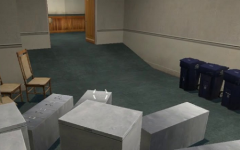
Whisper Of The House is a first-person exploration game centered on navigating a single residential space and uncovering its internal logic through interaction. The player enters a house with limited context and no explicit objectives, relying on observation and movement to understand how the space functions. Progress emerges from engaging with rooms, objects, and transitions rather than completing tasks or following instructions. The experience emphasizes attention and patience as the primary tools for advancement.
House Layout And Spatial Rules
The house in Whisper Of The House is structured as a connected environment with rooms that change function depending on how they are approached. Doors, corridors, and stairways do not always behave consistently, requiring players to track patterns over time. Some areas become accessible only after specific interactions elsewhere, creating indirect relationships between distant rooms. The layout encourages slow navigation and repeated traversal, allowing players to recognize how spatial rules evolve.
Interaction And Environmental Feedback
Interaction is limited to simple actions such as opening doors, examining objects, and triggering subtle changes within the house. These actions rarely provide immediate clarity, instead producing delayed effects that alter future navigation. The game avoids explicit prompts, placing responsibility on the player to interpret cause and effect. Feedback is delivered through environmental shifts rather than interface indicators, reinforcing the importance of memory and comparison.
Midway through the experience, players frequently engage in the following behaviors:
- Revisiting rooms to observe changes over time
- Interacting with objects to trigger indirect effects
- Tracking door states and altered pathways
- Testing movement routes through repetition
- Adjusting exploration patterns based on outcomes
Progression Without Objectives
Whisper Of The House does not present goals or milestones in a traditional sense. Progression is defined by increased familiarity with the house and its responses. As players recognize recurring patterns, navigation becomes more deliberate and efficient. New access points do not replace earlier paths but recontextualize them, encouraging reevaluation rather than linear advancement. The absence of scoring or completion metrics supports open-ended exploration.
The pacing remains consistent throughout, with no escalation in mechanical complexity. Instead, depth emerges from accumulated understanding. Players who move quickly may miss subtle changes, while those who slow down gain insight into how spaces relate. The game treats exploration as an interpretive process rather than a challenge to overcome.