-
 Crazygames 2024
-
 Feminization Games
-
 FNAF Unblocked
-
 Play With Friends
-
 Geometry Dash Unblocked
-
 Google Sites Unblocked
-
 GTA Unblocked
-
 Horror Unblocked
-
 Minecraft Unblocked
-
 1v1.LOL
-
 2 Player
-
 ABCya
ABCya
-
 Action
-
 Adventure
-
 Amanda The Adventurer
-
 Among Us
-
 Backrooms
-
 Baldi’s Basics
-
 Bamboozle
-
 Barbie
-
 BeamNG Drive
-
 Best
Best
-
 BitLife
-
 Bleach vs Naruto
-
 Chess
Chess
-
 Chilla's Art
-
 Choo Choo Charles
-
 Creepypasta
-
 Doraemon
-
 DOS
DOS
-
 Driving
-
 Easymath
-
 Evil Nun
-
 Fancade
-
 Farming Simulator
-
 Fighting
-
 FNaF
FNaF
-
 Friday Night Funkin
-
 Friv
Friv
-
 Gacha Life
-
 For Boys
-
 For Girls
-
 For Kids
-
 Garry’s Mod
-
 Garten of Banban
-
 Genshin Impact
-
 Goat Simulator
-
 Granny
-
 GTA
GTA
-
 Happy Wheels
-
 Hello Neighbor
-
 Horror
-
 Hungry Shark
-
 Incredibox
-
 Incredibox Scratch
-
 Indie
Indie
-
 IO Games
-
 Itch.io
-
 Japanese Horror
-
 Jump Force Mugen
-
 Kogama
-
 Lagged
-
 Mahjong
-
 Medical Doctor
-
 Melon Playground
-
 Minecraft
-
 Multiplayer
-
 Multiplayer Unblocked
-
 My Singing Monsters
-
 Nintendo
-
 Old Games
-
 Papa's
-
 PK XD
PK XD
-
 Poki
Poki
-
 Poppy Playtime
-
 Purble Place
-
 Puzzle
-
 Racing
-
 Rainbow Friends
-
 Red Ball
-
 Retro Bowl
-
 Roblox
-
 Sakura School Simulator
-
 Shooting
-
 Skibidi Toilet
-
 Snowmobile
-
 Solar Smash
-
 Sports
-
 Stickman
-
 Summertime Saga
-
 Supermarket Simulator
-
 Survival
-
 Talking Angela
-
 Talking Ben
-
 Talking Tom
-
 That's not my Neighbor
-
 The Amazing Digital Circus
-
 The Baby In Yellow
-
 Play The Pizza Edition Games Online
-
 The Sims
-
 Toca Boca
-
 Toca Life
-
 Touchdown
-
 Unblocked 6969
-
 Play Wobbly Life Games
-
 Retro Unblocked
-
 Sprunki Games
-
 Sprunki Wenda Treatment Games
-
 Stickman Unblocked
-
 Suika Games Online
-
 Unblocked 2024
-
 Unblocked Games 66
-
 Unblocked Games 76
-
 Unblocked Games 77
-
 Unblocked Games at School
-
 Unblocked Games Premium
-
 Unblocked Games World




Advertisement
We Gotta Go
Advertisement
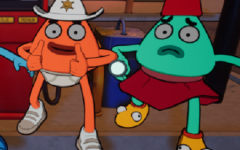
We Gotta Go is a session-based cooperative horror game where players are placed in an enclosed structure with a single task that must be completed quickly. The environment is unstable in layout, which means each attempt requires fresh navigation and rapid decision-making. The design centers on short runs where failure and restart are part of the expected loop.
Environment Layout And Navigation
The building is generated with changing room connections, forcing players to explore without relying on memory. Corridors, doors, and hidden paths are arranged differently in each session. This removes fixed routes and requires players to constantly reassess direction.
Navigation is not guided by markers. Instead, players rely on observation, communication, and spatial awareness. Some areas may appear similar, increasing the risk of confusion or backtracking. Efficient movement becomes a key factor in success.
Threat Management
We Gotta Go introduces interruptions in the form of environmental dangers and hostile entities. These elements are not always predictable and can appear during exploration. Players must react quickly, often changing direction or abandoning a route.
Avoidance is usually more effective than confrontation. The game does not focus on combat mechanics, so survival depends on movement and awareness. Mistakes can cost time, which directly affects the ability to complete the objective.
Core Systems Overview
Several mechanics operate together during each session:
- Procedural generation of the building layout
- Time-based pressure influencing player decisions
- Cooperative exploration without fixed roles
- Item interaction that supports progression
- Dynamic threats that disrupt movement
These systems create a structure where players must balance speed, caution, and coordination at all times.
Team Coordination
The game is designed for multiplayer interaction. Players can move together or split into smaller groups to cover more space. Both approaches have advantages and risks. Staying together improves safety, while splitting up increases exploration speed.
Communication determines efficiency. Teams that share information about discovered paths or blocked routes perform better. Without coordination, players may duplicate effort or become disoriented.
Overall Design Direction
We Gotta Go focuses on repetition with variation. Each run follows the same general objective but differs in execution due to layout changes and player decisions. There is no long-term progression system, and improvement comes from learning how to navigate and cooperate more effectively.
The simplified control scheme supports quick interaction, allowing players to focus on movement and decision-making. The game structure prioritizes clarity in objectives while maintaining variability in execution.