-
 Crazygames 2024
-
 Feminization Games
-
 FNAF Unblocked
-
 Play With Friends
-
 Geometry Dash Unblocked
-
 Google Sites Unblocked
-
 GTA Unblocked
-
 Horror Unblocked
-
 Minecraft Unblocked
-
 1v1.LOL
-
 2 Player
-
 ABCya
ABCya
-
 Action
-
 Adventure
-
 Amanda The Adventurer
-
 Among Us
-
 Backrooms
-
 Baldi’s Basics
-
 Bamboozle
-
 Barbie
-
 BeamNG Drive
-
 Best
Best
-
 BitLife
-
 Bleach vs Naruto
-
 Chess
Chess
-
 Chilla's Art
-
 Choo Choo Charles
-
 Creepypasta
-
 Doraemon
-
 DOS
DOS
-
 Driving
-
 Easymath
-
 Evil Nun
-
 Fancade
-
 Farming Simulator
-
 Fighting
-
 FNaF
FNaF
-
 Friday Night Funkin
-
 Friv
Friv
-
 Gacha Life
-
 For Boys
-
 For Girls
-
 For Kids
-
 Garry’s Mod
-
 Garten of Banban
-
 Genshin Impact
-
 Goat Simulator
-
 Granny
-
 GTA
GTA
-
 Happy Wheels
-
 Hello Neighbor
-
 Horror
-
 Hungry Shark
-
 Incredibox
-
 Incredibox Scratch
-
 Indie
Indie
-
 IO Games
-
 Itch.io
-
 Japanese Horror
-
 Jump Force Mugen
-
 Kogama
-
 Lagged
-
 Mahjong
-
 Medical Doctor
-
 Melon Playground
-
 Minecraft
-
 Multiplayer
-
 Multiplayer Unblocked
-
 My Singing Monsters
-
 Nintendo
-
 Old Games
-
 Papa's
-
 PK XD
PK XD
-
 Poki
Poki
-
 Poppy Playtime
-
 Purble Place
-
 Puzzle
-
 Racing
-
 Rainbow Friends
-
 Red Ball
-
 Retro Bowl
-
 Roblox
-
 Sakura School Simulator
-
 Shooting
-
 Skibidi Toilet
-
 Snowmobile
-
 Solar Smash
-
 Sports
-
 Stickman
-
 Summertime Saga
-
 Supermarket Simulator
-
 Survival
-
 Talking Angela
-
 Talking Ben
-
 Talking Tom
-
 That's not my Neighbor
-
 The Amazing Digital Circus
-
 The Baby In Yellow
-
 Play The Pizza Edition Games Online
-
 The Sims
-
 Toca Boca
-
 Toca Life
-
 Touchdown
-
 Unblocked 6969
-
 Play Wobbly Life Games
-
 Retro Unblocked
-
 Sprunki Games
-
 Sprunki Wenda Treatment Games
-
 Stickman Unblocked
-
 Suika Games Online
-
 Unblocked 2024
-
 Unblocked Games 66
-
 Unblocked Games 76
-
 Unblocked Games 77
-
 Unblocked Games at School
-
 Unblocked Games Premium
-
 Unblocked Games World



Advertisement
Wavelength
Advertisement
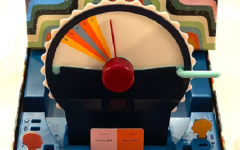
Wavelength is a social guessing game that revolves around interpreting clues and predicting the location of a hidden target on a conceptual scale. Each round challenges players to think about how a clue relates to two opposite ideas placed at the ends of the scale. One player, acting as the clue giver, sees the exact position of the target while the rest of the group must work together to determine where it lies. The core of the game is discussion, interpretation, and reaching consensus before the final guess is made.
Clue Giving And Team Discussion
A round of Wavelength starts when the clue giver views the hidden target through the rotating dial. The board displays two opposing concepts such as “cold to hot” or “safe to dangerous.” With this information, the clue giver must choose a single word or phrase that points the team toward the correct area on the scale. The rest of the group then discusses how the clue might lean toward one side or somewhere in the middle. Differences in perspective often create long debates, as players compare interpretations and negotiate a final answer.
Core Components And Game Structure
Wavelength is organized around several interconnected elements:
- A rotating dial that hides and reveals the target
- Category cards with opposing concepts
- A clue giver responsible for directing the team
- A guessing phase based on group discussion
- A scoring system marking each team’s accuracy
These components establish a predictable but flexible play pattern centered around communication and reasoning.
Strategy, Interpretation, And Player Roles
Players must decide how literal or abstract the clue might be. Some clues may point clearly to one side of the scale, while others may intentionally fall between extremes. The group must consider cultural background, personal experience, and knowledge of the clue giver’s thought process. The tension rises when interpretations differ widely, forcing players to defend their views or reconsider assumptions. Because the clue giver cannot speak during the discussion, their word choice becomes the primary tool guiding the team’s decision.
Replay Value And Group Dynamics
Wavelength offers replay value because no two groups interpret concepts the same way. Even repeated categories lead to entirely different clues and discussions depending on the players. The rotating dial and variety of concepts ensure that each round unfolds unpredictably. As players become familiar with each other’s tendencies, strategies develop around anticipating how clues are constructed. This evolving group dynamic keeps the game engaging over multiple sessions, making Wavelength suitable for casual gatherings and extended play.