-
 Crazygames 2024
-
 Feminization Games
-
 FNAF Unblocked
-
 Play With Friends
-
 Geometry Dash Unblocked
-
 Google Sites Unblocked
-
 GTA Unblocked
-
 Horror Unblocked
-
 Minecraft Unblocked
-
 1v1.LOL
-
 2 Player
-
 ABCya
ABCya
-
 Action
-
 Adventure
-
 Amanda The Adventurer
-
 Among Us
-
 Backrooms
-
 Baldi’s Basics
-
 Bamboozle
-
 Barbie
-
 BeamNG Drive
-
 Best
Best
-
 BitLife
-
 Bleach vs Naruto
-
 Chess
Chess
-
 Chilla's Art
-
 Choo Choo Charles
-
 Creepypasta
-
 Doraemon
-
 DOS
DOS
-
 Driving
-
 Easymath
-
 Evil Nun
-
 Fancade
-
 Farming Simulator
-
 Fighting
-
 FNaF
FNaF
-
 Friday Night Funkin
-
 Friv
Friv
-
 Gacha Life
-
 For Boys
-
 For Girls
-
 For Kids
-
 Garry’s Mod
-
 Garten of Banban
-
 Genshin Impact
-
 Goat Simulator
-
 Granny
-
 GTA
GTA
-
 Happy Wheels
-
 Hello Neighbor
-
 Horror
-
 Hungry Shark
-
 Incredibox
-
 Incredibox Scratch
-
 Indie
Indie
-
 IO Games
-
 Itch.io
-
 Japanese Horror
-
 Jump Force Mugen
-
 Kogama
-
 Lagged
-
 Mahjong
-
 Medical Doctor
-
 Melon Playground
-
 Minecraft
-
 Multiplayer
-
 Multiplayer Unblocked
-
 My Singing Monsters
-
 Nintendo
-
 Old Games
-
 Papa's
-
 PK XD
PK XD
-
 Poki
Poki
-
 Poppy Playtime
-
 Purble Place
-
 Puzzle
-
 Racing
-
 Rainbow Friends
-
 Red Ball
-
 Retro Bowl
-
 Roblox
-
 Sakura School Simulator
-
 Shooting
-
 Skibidi Toilet
-
 Snowmobile
-
 Solar Smash
-
 Sports
-
 Stickman
-
 Summertime Saga
-
 Supermarket Simulator
-
 Survival
-
 Talking Angela
-
 Talking Ben
-
 Talking Tom
-
 That's not my Neighbor
-
 The Amazing Digital Circus
-
 The Baby In Yellow
-
 Play The Pizza Edition Games Online
-
 The Sims
-
 Toca Boca
-
 Toca Life
-
 Touchdown
-
 Unblocked 6969
-
 Play Wobbly Life Games
-
 Retro Unblocked
-
 Sprunki Games
-
 Sprunki Wenda Treatment Games
-
 Stickman Unblocked
-
 Suika Games Online
-
 Unblocked 2024
-
 Unblocked Games 66
-
 Unblocked Games 76
-
 Unblocked Games 77
-
 Unblocked Games at School
-
 Unblocked Games Premium
-
 Unblocked Games World



Advertisement
The Messenger
Advertisement
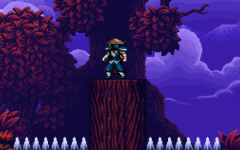
The Messenger tells the story of a young ninja tasked with delivering an important scroll to ensure the survival of his clan. The threat of an approaching demon army forces him to leave his village and travel across dangerous regions filled with traps and enemies. What appears to be a straightforward escort mission evolves into a journey shaped by shifting timelines and hidden layers within each environment. From the moment the journey begins, the player is responsible for navigating fast-moving stages that require precise movement and awareness of hazards.
Platforming as the Central Mechanic
Movement plays a central role in how The Messenger unfolds. The ninja can run, jump, climb walls, and strike objects mid-air to gain additional momentum. These tools help the player maintain flow while overcoming enemies, narrow ledges, and moving platforms. The early stages focus on mastering timing, while later levels introduce more complex arrangements of hazards. The responsiveness of the controls supports a rhythm-based style of play where success depends on careful execution.
Main Activities the Player Performs
Throughout The Messenger, players repeatedly engage in:
- Traversing levels using movement abilities
- Striking objects to extend jumps or reposition mid-air
- Gathering currency for ability upgrades
- Acquiring new tools that unlock alternate paths
- Returning to earlier areas after gaining new abilities
These actions shape the pace of the game and define how progress is made.
A Shift Into Time-Based Exploration
Midway through The Messenger, the structure changes as the narrative introduces time travel. Levels that once felt linear reveal additional routes accessible through timeline shifts. The world transforms between eras, altering layout, visual design, and available paths. This transition encourages players to think differently about familiar areas, using the new mechanics to uncover secrets and solve navigation puzzles. The shift broadens the experience, adding exploration to the platforming-focused foundation.
Growing Abilities and Strategic Choices
As players collect currency, they can purchase upgrades that change how they approach obstacles. Certain upgrades improve the ninja’s movement options, while others provide advantages in combat. Additional tools found throughout the world open further traversal possibilities, allowing players to reach hidden areas or complete optional challenges. These new abilities gradually reshape how earlier levels can be approached, creating opportunities for more efficient routes.
A Journey Built on Skill and Understanding
The Messenger combines precise platforming with an evolving world structure that encourages exploration and adaptation. Each new region introduces mechanics that require the player to refine techniques and respond to environmental changes. As the ability set grows, earlier challenges become manageable through new strategies. The balance between linear action and nonlinear discovery creates a progression path that emphasizes both mechanical skill and curiosity.