-
 Crazygames 2024
-
 Feminization Games
-
 FNAF Unblocked
-
 Play With Friends
-
 Geometry Dash Unblocked
-
 Google Sites Unblocked
-
 GTA Unblocked
-
 Horror Unblocked
-
 Minecraft Unblocked
-
 1v1.LOL
-
 2 Player
-
 ABCya
ABCya
-
 Action
-
 Adventure
-
 Amanda The Adventurer
-
 Among Us
-
 Backrooms
-
 Baldi’s Basics
-
 Bamboozle
-
 Barbie
-
 BeamNG Drive
-
 Best
Best
-
 BitLife
-
 Bleach vs Naruto
-
 Chess
Chess
-
 Chilla's Art
-
 Choo Choo Charles
-
 Creepypasta
-
 Doraemon
-
 DOS
DOS
-
 Driving
-
 Easymath
-
 Evil Nun
-
 Fancade
-
 Farming Simulator
-
 Fighting
-
 FNaF
FNaF
-
 Friday Night Funkin
-
 Friv
Friv
-
 Gacha Life
-
 For Boys
-
 For Girls
-
 For Kids
-
 Garry’s Mod
-
 Garten of Banban
-
 Genshin Impact
-
 Goat Simulator
-
 Granny
-
 GTA
GTA
-
 Happy Wheels
-
 Hello Neighbor
-
 Horror
-
 Hungry Shark
-
 Incredibox
-
 Incredibox Scratch
-
 Indie
Indie
-
 IO Games
-
 Itch.io
-
 Japanese Horror
-
 Jump Force Mugen
-
 Kogama
-
 Lagged
-
 Mahjong
-
 Medical Doctor
-
 Melon Playground
-
 Minecraft
-
 Multiplayer
-
 Multiplayer Unblocked
-
 My Singing Monsters
-
 Nintendo
-
 Old Games
-
 Papa's
-
 PK XD
PK XD
-
 Poki
Poki
-
 Poppy Playtime
-
 Purble Place
-
 Puzzle
-
 Racing
-
 Rainbow Friends
-
 Red Ball
-
 Retro Bowl
-
 Roblox
-
 Sakura School Simulator
-
 Shooting
-
 Skibidi Toilet
-
 Snowmobile
-
 Solar Smash
-
 Sports
-
 Stickman
-
 Summertime Saga
-
 Supermarket Simulator
-
 Survival
-
 Talking Angela
-
 Talking Ben
-
 Talking Tom
-
 That's not my Neighbor
-
 The Amazing Digital Circus
-
 The Baby In Yellow
-
 Play The Pizza Edition Games Online
-
 The Sims
-
 Toca Boca
-
 Toca Life
-
 Touchdown
-
 Unblocked 6969
-
 Play Wobbly Life Games
-
 Retro Unblocked
-
 Sprunki Games
-
 Sprunki Wenda Treatment Games
-
 Stickman Unblocked
-
 Suika Games Online
-
 Unblocked 2024
-
 Unblocked Games 66
-
 Unblocked Games 76
-
 Unblocked Games 77
-
 Unblocked Games at School
-
 Unblocked Games Premium
-
 Unblocked Games World




Advertisement
The Farmer Was Replaced
Advertisement

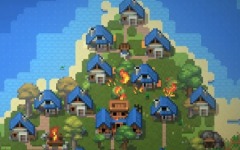
The Farmer Was Replaced places the player in control of a farm where traditional manual work is removed entirely and substituted with programmable automation. Instead of handling crops directly, the player writes instructions for a drone that performs each task. The structure of the game revolves around creating scripts, testing them in the field, and adjusting logic when results differ from expectations. As the farm scales, the programming requirements become more advanced, encouraging the player to refine earlier solutions.
Introduction To Core Systems
The game begins with a small plot and a limited set of programmable actions. Early tasks involve simple movement commands, planting routines, or harvesting instructions. The player learns how each function behaves in the environment and how to combine them into repeatable sequences. As the plot expands, more variables appear, and the initial straightforward commands must be incorporated into larger routines. The learning curve forms naturally through experimentation and repetition.
Mid-Stage Optimization And Farm Management
After basic command usage is mastered, the focus shifts toward efficiency. Larger fields and more resource types require scripts that handle multiple scenarios without direct supervision. During this phase, the player generally works with tasks such as:
- Building loops to automate planting cycles
- Adjusting movement patterns to minimize wasted actions
- Coordinating harvesting and storage tasks
- Integrating new crop types into existing code
These elements push the player to consider how each line of code contributes to the overall workflow.
Advanced Programming And Problem Solving
As progression continues, The Farmer Was Replaced introduces more demanding conditions. Some crops require timed actions, while others need more complex sequences involving several steps. The player may write functions within functions, add conditional checks, or restructure entire scripts to reduce inefficiencies. The challenge is to make the drone complete its tasks and to ensure the logic works under varying circumstances and farm layouts. This stage highlights the adaptability required from the player.
Replay Structure And Long-Term Development
In later stages, the farm becomes a fully automated system shaped by the player’s coding decisions. At this point, many return to earlier code to rewrite or optimize it, taking advantage of new tools and knowledge. The game’s open structure encourages experimentation, as scripts can be rewritten endlessly and adapted to new layouts or resources. The Farmer Was Replaced maintains long-term interest through its combination of programming logic and incremental progression, creating a framework that supports repeated attempts, refinements, and strategic testing.