-
 Crazygames 2024
-
 Feminization Games
-
 FNAF Unblocked
-
 Play With Friends
-
 Geometry Dash Unblocked
-
 Google Sites Unblocked
-
 GTA Unblocked
-
 Horror Unblocked
-
 Minecraft Unblocked
-
 1v1.LOL
-
 2 Player
-
 ABCya
ABCya
-
 Action
-
 Adventure
-
 Amanda The Adventurer
-
 Among Us
-
 Backrooms
-
 Baldi’s Basics
-
 Bamboozle
-
 Barbie
-
 BeamNG Drive
-
 Best
Best
-
 BitLife
-
 Bleach vs Naruto
-
 Chess
Chess
-
 Chilla's Art
-
 Choo Choo Charles
-
 Creepypasta
-
 Doraemon
-
 DOS
DOS
-
 Driving
-
 Easymath
-
 Evil Nun
-
 Fancade
-
 Farming Simulator
-
 Fighting
-
 FNaF
FNaF
-
 Friday Night Funkin
-
 Friv
Friv
-
 Gacha Life
-
 For Boys
-
 For Girls
-
 For Kids
-
 Garry’s Mod
-
 Garten of Banban
-
 Genshin Impact
-
 Goat Simulator
-
 Granny
-
 GTA
GTA
-
 Happy Wheels
-
 Hello Neighbor
-
 Horror
-
 Hungry Shark
-
 Incredibox
-
 Incredibox Scratch
-
 Indie
Indie
-
 IO Games
-
 Itch.io
-
 Japanese Horror
-
 Jump Force Mugen
-
 Kogama
-
 Lagged
-
 Mahjong
-
 Medical Doctor
-
 Melon Playground
-
 Minecraft
-
 Multiplayer
-
 Multiplayer Unblocked
-
 My Singing Monsters
-
 Nintendo
-
 Old Games
-
 Papa's
-
 PK XD
PK XD
-
 Poki
Poki
-
 Poppy Playtime
-
 Purble Place
-
 Puzzle
-
 Racing
-
 Rainbow Friends
-
 Red Ball
-
 Retro Bowl
-
 Roblox
-
 Sakura School Simulator
-
 Shooting
-
 Skibidi Toilet
-
 Snowmobile
-
 Solar Smash
-
 Sports
-
 Stickman
-
 Summertime Saga
-
 Supermarket Simulator
-
 Survival
-
 Talking Angela
-
 Talking Ben
-
 Talking Tom
-
 That's not my Neighbor
-
 The Amazing Digital Circus
-
 The Baby In Yellow
-
 Play The Pizza Edition Games Online
-
 The Sims
-
 Toca Boca
-
 Toca Life
-
 Touchdown
-
 Unblocked 6969
-
 Play Wobbly Life Games
-
 Retro Unblocked
-
 Sprunki Games
-
 Sprunki Wenda Treatment Games
-
 Stickman Unblocked
-
 Suika Games Online
-
 Unblocked 2024
-
 Unblocked Games 66
-
 Unblocked Games 76
-
 Unblocked Games 77
-
 Unblocked Games at School
-
 Unblocked Games Premium
-
 Unblocked Games World




Advertisement
Storm Grill
Advertisement
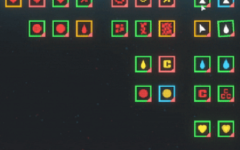
Storm Grill is structured around a single repeating scenario where the player is responsible for maintaining a working grill during continuous rainfall. The fire represents the core resource, and every raindrop that reaches it reduces its remaining capacity. The player removes raindrops through direct interaction, converting successful actions into currency. This creates a direct link between attention, timing, and long-term progress, with no alternative objectives or side activities.
Run-Based Structure
Each run in Storm Grill begins under fixed conditions defined by previously unlocked upgrades. There are no scripted events or checkpoints, and the session continues until the fire is completely extinguished. Raindrops appear at an increasing rate, forcing the player to respond more frequently as time passes. Failure is expected and functions as part of the design rather than a penalty, since progress is measured across many runs instead of within a single attempt.
Outside of active gameplay, the player spends accumulated currency on permanent upgrades. These upgrades persist between runs and modify future sessions in subtle but meaningful ways. The game avoids sudden jumps in power and instead relies on incremental improvement. This structure encourages repeated play while maintaining consistent rules across all sessions.
Upgrade Interaction and Choices
Progression in Storm Grill is defined by how different upgrade paths interact. The player is not locked into a specific build, but inefficient combinations quickly become noticeable during longer runs. Some upgrades reduce the need for constant input, while others increase the effectiveness of manual actions. The system rewards balanced investment rather than extreme specialization.
Core upgrade categories include:
- Manual interaction improvements that increase removal efficiency
- Passive effects that handle part of the rainfall automatically
- Defensive upgrades that slow fire depletion
- Economic upgrades that improve currency gain
Each category affects session flow, and neglecting one often limits overall progress.
Difficulty Scaling Model
The difficulty curve in Storm Grill is time-based rather than level-based. As a run continues, raindrops appear more frequently and leave less room for error. This ensures that every session eventually reaches a point where failure becomes unavoidable. The goal is not to prevent failure entirely, but to delay it through better preparation and execution.
Later sessions rely more heavily on passive systems, but manual input is never removed. High-intensity moments still require direct control, especially when multiple threats appear at once. This balance keeps the player engaged while allowing progress to reduce repetitive strain.
Storm Grill does not provide a final state or completion screen. Progress is measured through longer runs, improved stability, and more efficient systems. Each session reflects previous decisions, turning failure into a source of information rather than a setback.