-
 Crazygames 2024
-
 Feminization Games
-
 FNAF Unblocked
-
 Play With Friends
-
 Geometry Dash Unblocked
-
 Google Sites Unblocked
-
 GTA Unblocked
-
 Horror Unblocked
-
 Minecraft Unblocked
-
 1v1.LOL
-
 2 Player
-
 ABCya
ABCya
-
 Action
-
 Adventure
-
 Amanda The Adventurer
-
 Among Us
-
 Backrooms
-
 Baldi’s Basics
-
 Bamboozle
-
 Barbie
-
 BeamNG Drive
-
 Best
Best
-
 BitLife
-
 Bleach vs Naruto
-
 Chess
Chess
-
 Chilla's Art
-
 Choo Choo Charles
-
 Creepypasta
-
 Doraemon
-
 DOS
DOS
-
 Driving
-
 Easymath
-
 Evil Nun
-
 Fancade
-
 Farming Simulator
-
 Fighting
-
 FNaF
FNaF
-
 Friday Night Funkin
-
 Friv
Friv
-
 Gacha Life
-
 For Boys
-
 For Girls
-
 For Kids
-
 Garry’s Mod
-
 Garten of Banban
-
 Genshin Impact
-
 Goat Simulator
-
 Granny
-
 GTA
GTA
-
 Happy Wheels
-
 Hello Neighbor
-
 Horror
-
 Hungry Shark
-
 Incredibox
-
 Incredibox Scratch
-
 Indie
Indie
-
 IO Games
-
 Itch.io
-
 Japanese Horror
-
 Jump Force Mugen
-
 Kogama
-
 Lagged
-
 Mahjong
-
 Medical Doctor
-
 Melon Playground
-
 Minecraft
-
 Multiplayer
-
 Multiplayer Unblocked
-
 My Singing Monsters
-
 Nintendo
-
 Old Games
-
 Papa's
-
 PK XD
PK XD
-
 Poki
Poki
-
 Poppy Playtime
-
 Purble Place
-
 Puzzle
-
 Racing
-
 Rainbow Friends
-
 Red Ball
-
 Retro Bowl
-
 Roblox
-
 Sakura School Simulator
-
 Shooting
-
 Skibidi Toilet
-
 Snowmobile
-
 Solar Smash
-
 Sports
-
 Stickman
-
 Summertime Saga
-
 Supermarket Simulator
-
 Survival
-
 Talking Angela
-
 Talking Ben
-
 Talking Tom
-
 That's not my Neighbor
-
 The Amazing Digital Circus
-
 The Baby In Yellow
-
 Play The Pizza Edition Games Online
-
 The Sims
-
 Toca Boca
-
 Toca Life
-
 Touchdown
-
 Unblocked 6969
-
 Play Wobbly Life Games
-
 Retro Unblocked
-
 Sprunki Games
-
 Sprunki Wenda Treatment Games
-
 Stickman Unblocked
-
 Suika Games Online
-
 Unblocked 2024
-
 Unblocked Games 66
-
 Unblocked Games 76
-
 Unblocked Games 77
-
 Unblocked Games at School
-
 Unblocked Games Premium
-
 Unblocked Games World


Advertisement
QWOP Horse
Advertisement
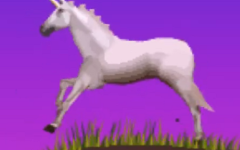
QWOP Horse is a physics-based game that focuses on direct control of movement through discrete keyboard inputs. The player controls a horse attempting to move forward across a simple, flat surface. There are no opponents, objectives, or endpoints beyond the distance traveled before failure. Every attempt begins under identical conditions, removing randomness from the environment and placing all emphasis on player input. Progress is defined entirely by how effectively the player can manage balance and motion over time.
Control Structure And Input Dependency
The control structure in QWOP Horse assigns specific keys to individual limbs of the horse. Movement is not automated, and there is no built-in walking cycle. Each key press rotates a joint or shifts weight, requiring deliberate coordination to achieve forward motion. Incorrect input sequences often result in instability or collapse. The game provides no instructional guidance beyond key labels, leaving players to discover effective patterns independently. This design shifts responsibility fully onto the player to understand how inputs interact with the physics system.
Physics Simulation And Movement Constraints
Movement in QWOP Horse is generated entirely through physics simulation rather than animation. Gravity, momentum, and joint rotation interact continuously, producing outcomes that can be difficult to predict. Maintaining balance becomes a constant challenge, as forward momentum often destabilizes posture. Small timing differences in input can lead to significantly different results. Because the physics system does not correct errors automatically, the horse frequently falls even after partial success, reinforcing the need for controlled and measured input.
Core Gameplay Loop
The gameplay loop in QWOP Horse is minimal and repetitive by design. Each run consists of attempting movement, losing balance, and restarting immediately. There are no checkpoints or progression markers beyond distance measurement. The loop is defined by several fixed elements:
- Independent control of multiple limbs
- Physics-driven reactions without animation smoothing
- Distance traveled as the only metric of success
- Instant reset after a fall
This structure encourages experimentation and repetition rather than completion or optimization through external systems.
Difficulty Model And Skill Acquisition
Difficulty in QWOP Horse remains constant throughout play. There are no difficulty settings, upgrades, or modifiers. Early attempts often result in minimal movement, while later attempts may show gradual improvement through refined coordination. Skill acquisition is uneven and non-linear, as progress depends on recognizing subtle patterns in balance and momentum. Failure is frequent and unavoidable, serving as the primary feedback mechanism for learning.