-
 Crazygames 2024
-
 Feminization Games
-
 FNAF Unblocked
-
 Play With Friends
-
 Geometry Dash Unblocked
-
 Google Sites Unblocked
-
 GTA Unblocked
-
 Horror Unblocked
-
 Minecraft Unblocked
-
 1v1.LOL
-
 2 Player
-
 ABCya
ABCya
-
 Action
-
 Adventure
-
 Amanda The Adventurer
-
 Among Us
-
 Backrooms
-
 Baldi’s Basics
-
 Bamboozle
-
 Barbie
-
 BeamNG Drive
-
 Best
Best
-
 BitLife
-
 Bleach vs Naruto
-
 Chess
Chess
-
 Chilla's Art
-
 Choo Choo Charles
-
 Creepypasta
-
 Doraemon
-
 DOS
DOS
-
 Driving
-
 Easymath
-
 Evil Nun
-
 Fancade
-
 Farming Simulator
-
 Fighting
-
 FNaF
FNaF
-
 Friday Night Funkin
-
 Friv
Friv
-
 Gacha Life
-
 For Boys
-
 For Girls
-
 For Kids
-
 Garry’s Mod
-
 Garten of Banban
-
 Genshin Impact
-
 Goat Simulator
-
 Granny
-
 GTA
GTA
-
 Happy Wheels
-
 Hello Neighbor
-
 Horror
-
 Hungry Shark
-
 Incredibox
-
 Incredibox Scratch
-
 Indie
Indie
-
 IO Games
-
 Itch.io
-
 Japanese Horror
-
 Jump Force Mugen
-
 Kogama
-
 Lagged
-
 Mahjong
-
 Medical Doctor
-
 Melon Playground
-
 Minecraft
-
 Multiplayer
-
 Multiplayer Unblocked
-
 My Singing Monsters
-
 Nintendo
-
 Old Games
-
 Papa's
-
 PK XD
PK XD
-
 Poki
Poki
-
 Poppy Playtime
-
 Purble Place
-
 Puzzle
-
 Racing
-
 Rainbow Friends
-
 Red Ball
-
 Retro Bowl
-
 Roblox
-
 Sakura School Simulator
-
 Shooting
-
 Skibidi Toilet
-
 Snowmobile
-
 Solar Smash
-
 Sports
-
 Stickman
-
 Summertime Saga
-
 Supermarket Simulator
-
 Survival
-
 Talking Angela
-
 Talking Ben
-
 Talking Tom
-
 That's not my Neighbor
-
 The Amazing Digital Circus
-
 The Baby In Yellow
-
 Play The Pizza Edition Games Online
-
 The Sims
-
 Toca Boca
-
 Toca Life
-
 Touchdown
-
 Unblocked 6969
-
 Play Wobbly Life Games
-
 Retro Unblocked
-
 Sprunki Games
-
 Sprunki Wenda Treatment Games
-
 Stickman Unblocked
-
 Suika Games Online
-
 Unblocked 2024
-
 Unblocked Games 66
-
 Unblocked Games 76
-
 Unblocked Games 77
-
 Unblocked Games at School
-
 Unblocked Games Premium
-
 Unblocked Games World




Advertisement
Project P.I.T.T.
Advertisement
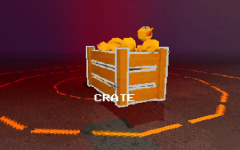
Project P.I.T.T. is a first-person physics game centered around a giant pit that consumes anything thrown into it. The player takes the role of a new worker assigned to supply the pit with objects produced in a small industrial facility. The pit grows as it receives more items, and its increasing size demands a higher volume of material. The loop revolves around crafting items, transporting them to the pit, and expanding the methods used to deliver them efficiently.
Core Loop And Early Tasks
At the beginning of Project P.I.T.T., only simple objects are available for production. The player interacts with machines that generate these objects and then manually carries or throws them into the pit. This early stage introduces the physics-based mechanics that define the game. Objects bounce, slide, and collide in ways that affect how easily they reach the pit. As the pit reacts to each item, the game demonstrates cause-and-effect through visual growth and sound cues.
Building Tools And Increasing Efficiency
As the pit grows, manual feeding becomes slower, so the game encourages players to construct tools that automate part of the process. A typical progression path may include:
- placing panels to guide objects toward the pit
- positioning launchers to push items across gaps
- building conveyor-like structures to move objects automatically
- arranging angled surfaces to chain movements
- testing physics interactions to refine item flow
These components transform the facility into a small assembly system, allowing the player to shift focus from manual labor to structural planning.
Environmental Design And Interactive Elements
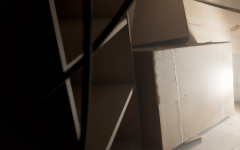
The facility in Project P.I.T.T. is built around interconnected corridors and rooms that support experimental building. The pit sits at the center of the environment, acting as both a goal and a visual indicator of progress. Surrounding spaces include platforms, open areas, and walls suitable for mounting contraptions. As players expand their constructions, the environment becomes part of the puzzle, influencing where items can move and how machines can be placed.
Long-Term Goals And Sandbox Freedom
Project P.I.T.T. does not restrict players to a single solution. Instead, it encourages experimentation through open-ended systems. Some players may focus on compact automated structures, while others build large experimental machines that push the physics engine to its limits. Because the pit continues growing throughout the playthrough, its demands increase naturally, motivating players to revisit earlier designs and improve them.
Replay Value And Player Creativity
The open structure of Project P.I.T.T. gives it strong replay potential. Each run offers new opportunities to redesign item delivery systems, adjust tool placement, or experiment with unusual item behaviors. The combination of physics interactions, expandable tools, and flexible building options allows players to approach the challenge in multiple ways. This emphasis on creativity and repeated iteration forms the foundation of the game’s long-term appeal.