-
 Crazygames 2024
-
 Feminization Games
-
 FNAF Unblocked
-
 Play With Friends
-
 Geometry Dash Unblocked
-
 Google Sites Unblocked
-
 GTA Unblocked
-
 Horror Unblocked
-
 Minecraft Unblocked
-
 1v1.LOL
-
 2 Player
-
 ABCya
ABCya
-
 Action
-
 Adventure
-
 Amanda The Adventurer
-
 Among Us
-
 Backrooms
-
 Baldi’s Basics
-
 Bamboozle
-
 Barbie
-
 BeamNG Drive
-
 Best
Best
-
 BitLife
-
 Bleach vs Naruto
-
 Chess
Chess
-
 Chilla's Art
-
 Choo Choo Charles
-
 Creepypasta
-
 Doraemon
-
 DOS
DOS
-
 Driving
-
 Easymath
-
 Evil Nun
-
 Fancade
-
 Farming Simulator
-
 Fighting
-
 FNaF
FNaF
-
 Friday Night Funkin
-
 Friv
Friv
-
 Gacha Life
-
 For Boys
-
 For Girls
-
 For Kids
-
 Garry’s Mod
-
 Garten of Banban
-
 Genshin Impact
-
 Goat Simulator
-
 Granny
-
 GTA
GTA
-
 Happy Wheels
-
 Hello Neighbor
-
 Horror
-
 Hungry Shark
-
 Incredibox
-
 Incredibox Scratch
-
 Indie
Indie
-
 IO Games
-
 Itch.io
-
 Japanese Horror
-
 Jump Force Mugen
-
 Kogama
-
 Lagged
-
 Mahjong
-
 Medical Doctor
-
 Melon Playground
-
 Minecraft
-
 Multiplayer
-
 Multiplayer Unblocked
-
 My Singing Monsters
-
 Nintendo
-
 Old Games
-
 Papa's
-
 PK XD
PK XD
-
 Poki
Poki
-
 Poppy Playtime
-
 Purble Place
-
 Puzzle
-
 Racing
-
 Rainbow Friends
-
 Red Ball
-
 Retro Bowl
-
 Roblox
-
 Sakura School Simulator
-
 Shooting
-
 Skibidi Toilet
-
 Snowmobile
-
 Solar Smash
-
 Sports
-
 Stickman
-
 Summertime Saga
-
 Supermarket Simulator
-
 Survival
-
 Talking Angela
-
 Talking Ben
-
 Talking Tom
-
 That's not my Neighbor
-
 The Amazing Digital Circus
-
 The Baby In Yellow
-
 Play The Pizza Edition Games Online
-
 The Sims
-
 Toca Boca
-
 Toca Life
-
 Touchdown
-
 Unblocked 6969
-
 Play Wobbly Life Games
-
 Retro Unblocked
-
 Sprunki Games
-
 Sprunki Wenda Treatment Games
-
 Stickman Unblocked
-
 Suika Games Online
-
 Unblocked 2024
-
 Unblocked Games 66
-
 Unblocked Games 76
-
 Unblocked Games 77
-
 Unblocked Games at School
-
 Unblocked Games Premium
-
 Unblocked Games World




Advertisement
PERCEPTUM
Advertisement
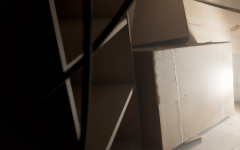
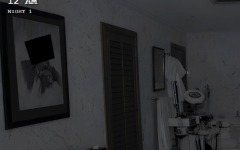
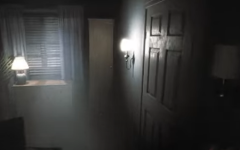
Perceptum is a psychological horror game built around investigation inside a house where an entire family disappeared shortly after moving in. The player takes the role of a medium who enters the building after the police have already abandoned the case. From the beginning, the game focuses on uncertainty rather than direct confrontation. The house looks familiar in structure, but the atmosphere suggests that normal rules no longer apply. The core objective is to move through this linear experience, search for clues, and reconstruct what happened to the missing family.
Investigating The Empty House
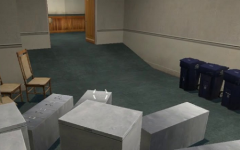
Most of the game takes place inside the family’s home, where ordinary rooms become the main source of tension. Hallways, bedrooms, and common spaces are designed to feel recognizable, but the silence and layout create a constant sense of discomfort. Progress depends on careful exploration, because the truth is hidden in details scattered through the environment. Instead of relying on weapons or combat, the player must pay attention to visual changes, hidden traces, and signs that something remains present inside the house even after the family vanished.
Mirror And Closed-Eye Mechanics
The central gameplay systems in Perceptum are built around two unusual tools: a mirror and the ability to close your eyes. The mirror reveals things that cannot be seen normally, including hidden marks and disturbing reflections. Closing your eyes removes visual information and forces the player to navigate through altered sound, whispers, and other audio cues. These mechanics turn perception itself into the main challenge, since the player must decide when to trust sight and when to rely on sound instead. This creates a structure where progress depends on observation, interpretation, and controlled movement through hostile spaces.
During the investigation, players regularly perform several connected actions:
- exploring rooms for clues about the missing family
- using the mirror to reveal hidden traces
- closing their eyes to detect sounds from beyond
- solving environmental puzzles inside the house
- following a linear path toward the final explanation
Atmosphere And Progression
Perceptum is designed as a compact horror experience lasting around three hours, with tension built through discomfort, silence, and the feeling that something is nearby but not fully visible. The house reacts to the player’s presence, and the game repeatedly suggests that seeing and hearing are both unreliable. Fear comes less from direct action and more from the pressure of moving forward while unsure whether the next clue is real, supernatural, or a distortion of perception.
Overall, Perceptum presents a first-person horror investigation where perception becomes the main mechanic. By entering the abandoned house, examining hidden details, using a mirror to reveal what should remain unseen, and closing your eyes to hear what cannot be seen, the player gradually uncovers the truth behind the family’s disappearance. The game builds its identity around psychological tension, limited tools, and a setting where every room may contain evidence or danger just outside normal perception.