-
 Crazygames 2024
-
 Feminization Games
-
 FNAF Unblocked
-
 Play With Friends
-
 Geometry Dash Unblocked
-
 Google Sites Unblocked
-
 GTA Unblocked
-
 Horror Unblocked
-
 Minecraft Unblocked
-
 1v1.LOL
-
 2 Player
-
 ABCya
ABCya
-
 Action
-
 Adventure
-
 Amanda The Adventurer
-
 Among Us
-
 Backrooms
-
 Baldi’s Basics
-
 Bamboozle
-
 Barbie
-
 BeamNG Drive
-
 Best
Best
-
 BitLife
-
 Bleach vs Naruto
-
 Chess
Chess
-
 Chilla's Art
-
 Choo Choo Charles
-
 Creepypasta
-
 Doraemon
-
 DOS
DOS
-
 Driving
-
 Easymath
-
 Evil Nun
-
 Fancade
-
 Farming Simulator
-
 Fighting
-
 FNaF
FNaF
-
 Friday Night Funkin
-
 Friv
Friv
-
 Gacha Life
-
 For Boys
-
 For Girls
-
 For Kids
-
 Garry’s Mod
-
 Garten of Banban
-
 Genshin Impact
-
 Goat Simulator
-
 Granny
-
 GTA
GTA
-
 Happy Wheels
-
 Hello Neighbor
-
 Horror
-
 Hungry Shark
-
 Incredibox
-
 Incredibox Scratch
-
 Indie
Indie
-
 IO Games
-
 Itch.io
-
 Japanese Horror
-
 Jump Force Mugen
-
 Kogama
-
 Lagged
-
 Mahjong
-
 Medical Doctor
-
 Melon Playground
-
 Minecraft
-
 Multiplayer
-
 Multiplayer Unblocked
-
 My Singing Monsters
-
 Nintendo
-
 Old Games
-
 Papa's
-
 PK XD
PK XD
-
 Poki
Poki
-
 Poppy Playtime
-
 Purble Place
-
 Puzzle
-
 Racing
-
 Rainbow Friends
-
 Red Ball
-
 Retro Bowl
-
 Roblox
-
 Sakura School Simulator
-
 Shooting
-
 Skibidi Toilet
-
 Snowmobile
-
 Solar Smash
-
 Sports
-
 Stickman
-
 Summertime Saga
-
 Supermarket Simulator
-
 Survival
-
 Talking Angela
-
 Talking Ben
-
 Talking Tom
-
 That's not my Neighbor
-
 The Amazing Digital Circus
-
 The Baby In Yellow
-
 Play The Pizza Edition Games Online
-
 The Sims
-
 Toca Boca
-
 Toca Life
-
 Touchdown
-
 Unblocked 6969
-
 Play Wobbly Life Games
-
 Retro Unblocked
-
 Sprunki Games
-
 Sprunki Wenda Treatment Games
-
 Stickman Unblocked
-
 Suika Games Online
-
 Unblocked 2024
-
 Unblocked Games 66
-
 Unblocked Games 76
-
 Unblocked Games 77
-
 Unblocked Games at School
-
 Unblocked Games Premium
-
 Unblocked Games World

Advertisement
Panzer General 2
Advertisement
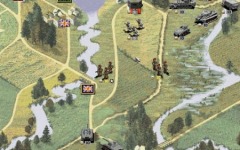
Panzer General 2 is a turn-based strategy game that places the player in control of military formations during World War II. The game is structured around hex-based maps where each turn represents a planning phase rather than a real-time exchange. Players must evaluate objectives, terrain, and unit condition before committing to actions. Battles are part of longer campaigns, which means success is measured not only by winning a single scenario but by preserving strength for future operations.
Strategic Flow And Turn Management
Each scenario in Panzer General 2 follows a strict turn structure that limits how much can be accomplished at once. Units can move, attack, or resupply depending on their status and surroundings. Once an action is taken, it cannot be reversed, which places emphasis on careful planning. Turn limits add pressure, forcing the player to balance speed and caution. Advancing too quickly can expose units, while slow progress may result in failing objectives.
Terrain Influence And Battlefield Control
Terrain plays a major role in how battles develop. Every hex affects movement and combat outcomes, making map reading an essential skill. Cities and forests provide defensive advantages, while rivers and mountains restrict movement. Control of supply points and objectives often determines the flow of a battle. Players must decide where to concentrate forces and where to delay the enemy, using terrain to offset numerical or technological disadvantages.
In the middle of a campaign, players commonly manage several interconnected aspects:
- positioning units to maximize terrain benefits
- capturing objectives to secure resources
- preserving experienced units for later scenarios
- reinforcing or upgrading units with limited prestige
- adjusting tactics to meet turn-based objectives
These elements link individual scenarios into a broader strategic plan.
Unit Development And Campaign Continuity
One of the defining features of Panzer General 2 is unit persistence. Units that survive combat gain experience, improving their effectiveness over time. This creates long-term value and encourages careful use of veteran forces. Between scenarios, players must decide whether to reinforce damaged units or invest in upgrades. Because resources carry over, inefficient decisions in early battles can make later scenarios more difficult.
Challenge Structure And Player Adaptation
The game offers multiple campaigns and difficulty settings that alter enemy strength and resource availability. Higher difficulty levels require precise positioning and efficient use of units. The artificial intelligence focuses on defending key locations and exploiting mistakes rather than following fixed scripts. This forces players to adapt their approach based on battlefield conditions rather than relying on a single strategy.