-
 Crazygames 2024
-
 Feminization Games
-
 FNAF Unblocked
-
 Play With Friends
-
 Geometry Dash Unblocked
-
 Google Sites Unblocked
-
 GTA Unblocked
-
 Horror Unblocked
-
 Minecraft Unblocked
-
 1v1.LOL
-
 2 Player
-
 ABCya
ABCya
-
 Action
-
 Adventure
-
 Amanda The Adventurer
-
 Among Us
-
 Backrooms
-
 Baldi’s Basics
-
 Bamboozle
-
 Barbie
-
 BeamNG Drive
-
 Best
Best
-
 BitLife
-
 Bleach vs Naruto
-
 Chess
Chess
-
 Chilla's Art
-
 Choo Choo Charles
-
 Creepypasta
-
 Doraemon
-
 DOS
DOS
-
 Driving
-
 Easymath
-
 Evil Nun
-
 Fancade
-
 Farming Simulator
-
 Fighting
-
 FNaF
FNaF
-
 Friday Night Funkin
-
 Friv
Friv
-
 Gacha Life
-
 For Boys
-
 For Girls
-
 For Kids
-
 Garry’s Mod
-
 Garten of Banban
-
 Genshin Impact
-
 Goat Simulator
-
 Granny
-
 GTA
GTA
-
 Happy Wheels
-
 Hello Neighbor
-
 Horror
-
 Hungry Shark
-
 Incredibox
-
 Incredibox Scratch
-
 Indie
Indie
-
 IO Games
-
 Itch.io
-
 Japanese Horror
-
 Jump Force Mugen
-
 Kogama
-
 Lagged
-
 Mahjong
-
 Medical Doctor
-
 Melon Playground
-
 Minecraft
-
 Multiplayer
-
 Multiplayer Unblocked
-
 My Singing Monsters
-
 Nintendo
-
 Old Games
-
 Papa's
-
 PK XD
PK XD
-
 Poki
Poki
-
 Poppy Playtime
-
 Purble Place
-
 Puzzle
-
 Racing
-
 Rainbow Friends
-
 Red Ball
-
 Retro Bowl
-
 Roblox
-
 Sakura School Simulator
-
 Shooting
-
 Skibidi Toilet
-
 Snowmobile
-
 Solar Smash
-
 Sports
-
 Stickman
-
 Summertime Saga
-
 Supermarket Simulator
-
 Survival
-
 Talking Angela
-
 Talking Ben
-
 Talking Tom
-
 That's not my Neighbor
-
 The Amazing Digital Circus
-
 The Baby In Yellow
-
 Play The Pizza Edition Games Online
-
 The Sims
-
 Toca Boca
-
 Toca Life
-
 Touchdown
-
 Unblocked 6969
-
 Play Wobbly Life Games
-
 Retro Unblocked
-
 Sprunki Games
-
 Sprunki Wenda Treatment Games
-
 Stickman Unblocked
-
 Suika Games Online
-
 Unblocked 2024
-
 Unblocked Games 66
-
 Unblocked Games 76
-
 Unblocked Games 77
-
 Unblocked Games at School
-
 Unblocked Games Premium
-
 Unblocked Games World

Advertisement
Five Nights at Frickbear’s 3
Advertisement

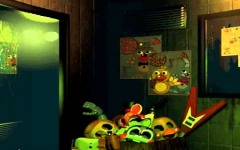
Five Nights at Frickbears 3 is a fan-made survival horror game that expands on the structure of previous entries while introducing additional systems and player-driven variation. The player takes the role of a night guard working in a series of connected locations, where animatronic entities attempt to reach the office. Each shift requires monitoring threats, managing limited tools, and reacting to unpredictable behavior patterns. The game emphasizes replayability by allowing different routes and configurations across sessions.
Gameplay Structure And Systems
The gameplay combines classic surveillance mechanics with additional features such as free-roam segments and interactive events. Players switch between monitoring systems and direct movement, depending on the situation. This creates a hybrid structure where both observation and active control are required.
Each night introduces new mechanics or variations. The player must adapt to changing conditions, including different enemy behaviors and system limitations. Progression depends on understanding patterns and managing available tools effectively.
Animatronics And Threat Design
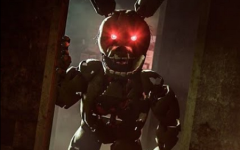
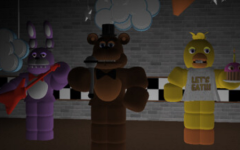
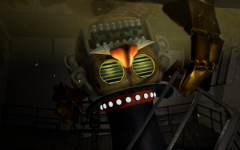
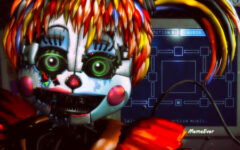
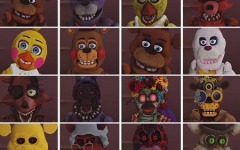
A central element of the game is the variety of animatronic enemies. Each entity has unique behavior and requires a different response. Some approach directly, while others rely on indirect mechanics such as environmental influence or system disruption.
- Multiple animatronics with distinct patterns
- Defensive tools such as cameras and light sources
- System management affecting survival
- Optional encounters through exploration
- Increasing complexity across nights
Narrative And Player Choice
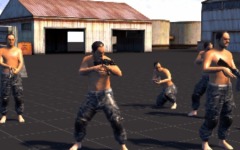
The game includes multiple story paths that depend on player decisions. Different protagonists and routes provide variation in dialogue and events. This structure allows players to experience alternative versions of the same scenario.
Story elements are presented through interactions, hidden sequences, and optional content. The player can uncover additional details by exploring beyond required objectives, creating a layered narrative that is not fully revealed in a single playthrough.
Visual Style And Presentation
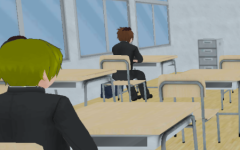
The visual design combines 2D and 3D elements, creating a stylized representation of environments and characters. The interface remains consistent with the genre, focusing on camera feeds, system panels, and minimal overlays.
Animations and effects are used to communicate threats and system changes. Visual clarity is maintained to ensure that players can react quickly to events during active gameplay segments.
Replayability And Session Variation
Replayability is a key focus of the game. Different routes, character choices, and enemy combinations create varied experiences across sessions. Players can adjust difficulty and experiment with different strategies.
The structure encourages repeated playthroughs to explore all available content. Each session may introduce new interactions or outcomes, making progression dependent on both player decisions and system understanding.