-
 Crazygames 2024
-
 Feminization Games
-
 FNAF Unblocked
-
 Play With Friends
-
 Geometry Dash Unblocked
-
 Google Sites Unblocked
-
 GTA Unblocked
-
 Horror Unblocked
-
 Minecraft Unblocked
-
 1v1.LOL
-
 2 Player
-
 ABCya
ABCya
-
 Action
-
 Adventure
-
 Amanda The Adventurer
-
 Among Us
-
 Backrooms
-
 Baldi’s Basics
-
 Bamboozle
-
 Barbie
-
 BeamNG Drive
-
 Best
Best
-
 BitLife
-
 Bleach vs Naruto
-
 Chess
Chess
-
 Chilla's Art
-
 Choo Choo Charles
-
 Creepypasta
-
 Doraemon
-
 DOS
DOS
-
 Driving
-
 Easymath
-
 Evil Nun
-
 Fancade
-
 Farming Simulator
-
 Fighting
-
 FNaF
FNaF
-
 Friday Night Funkin
-
 Friv
Friv
-
 Gacha Life
-
 For Boys
-
 For Girls
-
 For Kids
-
 Garry’s Mod
-
 Garten of Banban
-
 Genshin Impact
-
 Goat Simulator
-
 Granny
-
 GTA
GTA
-
 Happy Wheels
-
 Hello Neighbor
-
 Horror
-
 Hungry Shark
-
 Incredibox
-
 Incredibox Scratch
-
 Indie
Indie
-
 IO Games
-
 Itch.io
-
 Japanese Horror
-
 Jump Force Mugen
-
 Kogama
-
 Lagged
-
 Mahjong
-
 Medical Doctor
-
 Melon Playground
-
 Minecraft
-
 Multiplayer
-
 Multiplayer Unblocked
-
 My Singing Monsters
-
 Nintendo
-
 Old Games
-
 Papa's
-
 PK XD
PK XD
-
 Poki
Poki
-
 Poppy Playtime
-
 Purble Place
-
 Puzzle
-
 Racing
-
 Rainbow Friends
-
 Red Ball
-
 Retro Bowl
-
 Roblox
-
 Sakura School Simulator
-
 Shooting
-
 Skibidi Toilet
-
 Snowmobile
-
 Solar Smash
-
 Sports
-
 Stickman
-
 Summertime Saga
-
 Supermarket Simulator
-
 Survival
-
 Talking Angela
-
 Talking Ben
-
 Talking Tom
-
 That's not my Neighbor
-
 The Amazing Digital Circus
-
 The Baby In Yellow
-
 Play The Pizza Edition Games Online
-
 The Sims
-
 Toca Boca
-
 Toca Life
-
 Touchdown
-
 Unblocked 6969
-
 Play Wobbly Life Games
-
 Retro Unblocked
-
 Sprunki Games
-
 Sprunki Wenda Treatment Games
-
 Stickman Unblocked
-
 Suika Games Online
-
 Unblocked 2024
-
 Unblocked Games 66
-
 Unblocked Games 76
-
 Unblocked Games 77
-
 Unblocked Games at School
-
 Unblocked Games Premium
-
 Unblocked Games World



Advertisement
Dark Pals: The 1st Floor
Advertisement

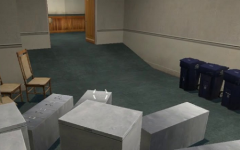
Dark Pals: The 1st Floor is a single-player horror game built around environmental navigation and puzzle-dependent progression. The gameplay framework centers on exploring a deserted mental health facility where advancement is determined by interaction with level mechanics rather than combat systems. Players move through confined interior spaces that function as both navigational challenges and structured puzzle environments. The design prioritizes observation, movement planning, and situational awareness across repeatable exploration sequences.
Gameplay Flow and Objective Design
Each gameplay segment is organized around clearly defined objectives tied to environmental puzzles. Players must locate interactive elements, interpret mechanical relationships, and apply logic-based solutions to unlock new areas. Movement through the facility is not linear; progression frequently requires revisiting spaces after completing specific tasks. This structure reinforces spatial memory and route optimization as core skills.
A primary mechanic involves the Ink Blaster, a tool used to manipulate objects and activate mechanisms embedded within the environment. Puzzle sequences are directly integrated into navigation, meaning players engage with environmental systems while maintaining awareness of threats. Completion conditions depend on resolving puzzle chains that open access to restricted zones or exit pathways.
Core gameplay systems include:
- Exploration through interconnected interior layouts
- Puzzle resolution controlling area access
- Ink Blaster interactions with environmental elements
- Restricted zones requiring mechanical solutions
- Exit routes linked to objective completion
Environmental Layout and Navigation Logic
The facility layout emphasizes controlled movement and spatial decision-making. Corridors, rooms, and transitional areas form a network that influences player routes and encounter frequency. Certain sections impose visibility limitations or movement constraints, altering navigation strategies. This design approach encourages methodical exploration rather than direct traversal.
Navigation becomes increasingly strategic as players balance puzzle objectives with hazard avoidance. The arrangement of interactive components across multiple spaces requires players to understand environmental structure rather than focus on isolated challenges.
Threat Systems and Survival Mechanics
Hostile mascot-like entities operate as persistent hazards within the environment. These threats follow defined behavioral patterns, allowing players to anticipate risks through observation and movement analysis. Survival mechanics are based on evasion, positioning, and timing rather than confrontation. Encounters often intersect with puzzle-solving sequences, requiring players to manage objectives while avoiding detection or pursuit.
Narrative Delivery Through Environment
Narrative elements are conveyed indirectly through environmental details and gameplay progression. Visual cues, audio signals, and spatial transitions provide contextual information about the facility and its history. Instead of explicit storytelling segments, players construct understanding through exploration and interaction. This integration ensures that gameplay mechanics and narrative interpretation remain interconnected throughout the experience.