-
 Crazygames 2024
-
 Feminization Games
-
 FNAF Unblocked
-
 Play With Friends
-
 Geometry Dash Unblocked
-
 Google Sites Unblocked
-
 GTA Unblocked
-
 Horror Unblocked
-
 Minecraft Unblocked
-
 1v1.LOL
-
 2 Player
-
 ABCya
ABCya
-
 Action
-
 Adventure
-
 Amanda The Adventurer
-
 Among Us
-
 Backrooms
-
 Baldi’s Basics
-
 Bamboozle
-
 Barbie
-
 BeamNG Drive
-
 Best
Best
-
 BitLife
-
 Bleach vs Naruto
-
 Chess
Chess
-
 Chilla's Art
-
 Choo Choo Charles
-
 Creepypasta
-
 Doraemon
-
 DOS
DOS
-
 Driving
-
 Easymath
-
 Evil Nun
-
 Fancade
-
 Farming Simulator
-
 Fighting
-
 FNaF
FNaF
-
 Friday Night Funkin
-
 Friv
Friv
-
 Gacha Life
-
 For Boys
-
 For Girls
-
 For Kids
-
 Garry’s Mod
-
 Garten of Banban
-
 Genshin Impact
-
 Goat Simulator
-
 Granny
-
 GTA
GTA
-
 Happy Wheels
-
 Hello Neighbor
-
 Horror
-
 Hungry Shark
-
 Incredibox
-
 Incredibox Scratch
-
 Indie
Indie
-
 IO Games
-
 Itch.io
-
 Japanese Horror
-
 Jump Force Mugen
-
 Kogama
-
 Lagged
-
 Mahjong
-
 Medical Doctor
-
 Melon Playground
-
 Minecraft
-
 Multiplayer
-
 Multiplayer Unblocked
-
 My Singing Monsters
-
 Nintendo
-
 Old Games
-
 Papa's
-
 PK XD
PK XD
-
 Poki
Poki
-
 Poppy Playtime
-
 Purble Place
-
 Puzzle
-
 Racing
-
 Rainbow Friends
-
 Red Ball
-
 Retro Bowl
-
 Roblox
-
 Sakura School Simulator
-
 Shooting
-
 Skibidi Toilet
-
 Snowmobile
-
 Solar Smash
-
 Sports
-
 Stickman
-
 Summertime Saga
-
 Supermarket Simulator
-
 Survival
-
 Talking Angela
-
 Talking Ben
-
 Talking Tom
-
 That's not my Neighbor
-
 The Amazing Digital Circus
-
 The Baby In Yellow
-
 Play The Pizza Edition Games Online
-
 The Sims
-
 Toca Boca
-
 Toca Life
-
 Touchdown
-
 Unblocked 6969
-
 Play Wobbly Life Games
-
 Retro Unblocked
-
 Sprunki Games
-
 Sprunki Wenda Treatment Games
-
 Stickman Unblocked
-
 Suika Games Online
-
 Unblocked 2024
-
 Unblocked Games 66
-
 Unblocked Games 76
-
 Unblocked Games 77
-
 Unblocked Games at School
-
 Unblocked Games Premium
-
 Unblocked Games World




Advertisement
Dark Deception Hunted
Advertisement
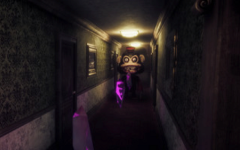
Dark Deception Hunted is a Roblox multiplayer experience that adapts the gameplay principles of the Dark Deception series into a session-based format. The game prioritizes short, repeatable matches where players enter maze-like environments, complete defined objectives, and restart runs as needed. This structure removes reliance on narrative progression and instead emphasizes mechanical performance, navigation efficiency, and survival management. The design aligns with platform-oriented play, supporting both quick sessions and extended repetition.
Core Gameplay Framework
Each session centers on movement through maze-driven maps where players must collect soul shards distributed across the environment. Level layouts typically consist of interconnected corridors, intersections, and open zones that influence route planning. Enemy entities act as constant hazards, requiring players to balance exploration with evasion. Because direct combat is absent, player success depends on spatial awareness, path optimization, and consistent movement decisions.
Completion mechanics follow a predictable loop. Players gather the required shards and then navigate toward an exit portal to finalize the run. Failure conditions are tied to life systems rather than immediate elimination, allowing limited recovery opportunities within a match. This framework encourages repeated attempts while maintaining clear performance objectives.
Match Systems and Variability
Difficulty selection modifies gameplay parameters, affecting enemy behavior, movement pacing, and survival constraints. Higher difficulties introduce faster threats and tighter margins for error, reinforcing the importance of map familiarity. Additional variability is implemented through curses, temporary modifiers that alter match conditions.
Primary gameplay systems include:
- Soul shard collection across maze environments
- Difficulty-based enemy behavior adjustments
- Curses modifying visibility or mechanics
- Life systems determining survival limits
- Exit portals linked to objective completion
These layered systems ensure that sessions remain mechanically consistent while allowing situational differences between runs.
Multiplayer Dynamics and Strategy
Dark Deception Hunted supports solo sessions alongside cooperative multiplayer modes. In cooperative runs, players share objectives but maintain independent survival states. This design promotes teamwork without creating strict dependencies between participants. Individual mistakes affect personal outcomes rather than terminating the entire match.
Certain variations introduce asymmetrical roles, where players may control hostile entities instead of navigating objectives. These configurations alter strategic priorities, shifting focus toward prediction, interception, and movement control. As a result, multiplayer sessions emphasize adaptability, positioning, and awareness of both environmental and player-driven threats.