-
 Crazygames 2024
-
 Feminization Games
-
 FNAF Unblocked
-
 Play With Friends
-
 Geometry Dash Unblocked
-
 Google Sites Unblocked
-
 GTA Unblocked
-
 Horror Unblocked
-
 Minecraft Unblocked
-
 1v1.LOL
-
 2 Player
-
 ABCya
ABCya
-
 Action
-
 Adventure
-
 Amanda The Adventurer
-
 Among Us
-
 Backrooms
-
 Baldi’s Basics
-
 Bamboozle
-
 Barbie
-
 BeamNG Drive
-
 Best
Best
-
 BitLife
-
 Bleach vs Naruto
-
 Chess
Chess
-
 Chilla's Art
-
 Choo Choo Charles
-
 Creepypasta
-
 Doraemon
-
 DOS
DOS
-
 Driving
-
 Easymath
-
 Evil Nun
-
 Fancade
-
 Farming Simulator
-
 Fighting
-
 FNaF
FNaF
-
 Friday Night Funkin
-
 Friv
Friv
-
 Gacha Life
-
 For Boys
-
 For Girls
-
 For Kids
-
 Garry’s Mod
-
 Garten of Banban
-
 Genshin Impact
-
 Goat Simulator
-
 Granny
-
 GTA
GTA
-
 Happy Wheels
-
 Hello Neighbor
-
 Horror
-
 Hungry Shark
-
 Incredibox
-
 Incredibox Scratch
-
 Indie
Indie
-
 IO Games
-
 Itch.io
-
 Japanese Horror
-
 Jump Force Mugen
-
 Kogama
-
 Lagged
-
 Mahjong
-
 Medical Doctor
-
 Melon Playground
-
 Minecraft
-
 Multiplayer
-
 Multiplayer Unblocked
-
 My Singing Monsters
-
 Nintendo
-
 Old Games
-
 Papa's
-
 PK XD
PK XD
-
 Poki
Poki
-
 Poppy Playtime
-
 Purble Place
-
 Puzzle
-
 Racing
-
 Rainbow Friends
-
 Red Ball
-
 Retro Bowl
-
 Roblox
-
 Sakura School Simulator
-
 Shooting
-
 Skibidi Toilet
-
 Snowmobile
-
 Solar Smash
-
 Sports
-
 Stickman
-
 Summertime Saga
-
 Supermarket Simulator
-
 Survival
-
 Talking Angela
-
 Talking Ben
-
 Talking Tom
-
 That's not my Neighbor
-
 The Amazing Digital Circus
-
 The Baby In Yellow
-
 Play The Pizza Edition Games Online
-
 The Sims
-
 Toca Boca
-
 Toca Life
-
 Touchdown
-
 Unblocked 6969
-
 Play Wobbly Life Games
-
 Retro Unblocked
-
 Sprunki Games
-
 Sprunki Wenda Treatment Games
-
 Stickman Unblocked
-
 Suika Games Online
-
 Unblocked 2024
-
 Unblocked Games 66
-
 Unblocked Games 76
-
 Unblocked Games 77
-
 Unblocked Games at School
-
 Unblocked Games Premium
-
 Unblocked Games World



Advertisement
Chillas Art Fishing Horror
Advertisement
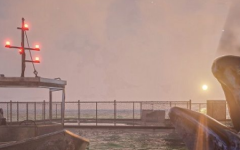
Chillas Art Fishing Horror is an independent first-person title that combines structured fishing mechanics with gradual psychological tension. The player navigates coastal waters using a small boat equipped with a harpoon. The objective is to catch fish, return to shore, sell the catch, and upgrade equipment to reach more distant areas. The gameplay loop is consistent and system-driven, with progression based on economic efficiency and exploration range.
Fishing Mechanics And Operational Limits
Fishing is performed manually through a harpoon system that depends on aim and timing. Each successful catch generates income, which is required for upgrades. The boat has practical limitations, including restricted fuel capacity and reduced visibility during night or fog conditions. These constraints require planning before traveling far from the dock.
Upgrades improve operational range and safety. Players can increase fuel storage, enhance lighting systems, and improve mobility. As these upgrades accumulate, the playable area expands. Deeper waters introduce new species and environmental irregularities that were not present in early stages.
System Interaction And Progression
The core mechanics operate within a compact framework:
- Manual harpoon targeting
- Selling fish for in-game currency
- Fuel consumption management
- Equipment and mobility upgrades
- Encountering increasingly unusual marine life
Each system reinforces the central loop of risk and return. Greater distance offers higher-value catches but increases environmental uncertainty.
Horror Elements And Environmental Design
Chillas Art Fishing Horror integrates horror gradually through atmosphere rather than direct confrontation. Isolation at sea, reduced visibility, and subtle changes in creature appearance contribute to tension. Strange figures beneath the surface or unexplained visual distortions appear as exploration continues.
The game avoids complex storytelling sequences and instead relies on environmental cues and sound design. Ordinary fishing routines are interrupted by unexpected anomalies, creating contrast between familiarity and disturbance. This structure allows simulation mechanics and horror elements to coexist within a unified progression system focused on exploration and controlled risk.