-
 Crazygames 2024
-
 Feminization Games
-
 FNAF Unblocked
-
 Play With Friends
-
 Geometry Dash Unblocked
-
 Google Sites Unblocked
-
 GTA Unblocked
-
 Horror Unblocked
-
 Minecraft Unblocked
-
 1v1.LOL
-
 2 Player
-
 ABCya
ABCya
-
 Action
-
 Adventure
-
 Amanda The Adventurer
-
 Among Us
-
 Backrooms
-
 Baldi’s Basics
-
 Bamboozle
-
 Barbie
-
 BeamNG Drive
-
 Best
Best
-
 BitLife
-
 Bleach vs Naruto
-
 Chess
Chess
-
 Chilla's Art
-
 Choo Choo Charles
-
 Creepypasta
-
 Doraemon
-
 DOS
DOS
-
 Driving
-
 Easymath
-
 Evil Nun
-
 Fancade
-
 Farming Simulator
-
 Fighting
-
 FNaF
FNaF
-
 Friday Night Funkin
-
 Friv
Friv
-
 Gacha Life
-
 For Boys
-
 For Girls
-
 For Kids
-
 Garry’s Mod
-
 Garten of Banban
-
 Genshin Impact
-
 Goat Simulator
-
 Granny
-
 GTA
GTA
-
 Happy Wheels
-
 Hello Neighbor
-
 Horror
-
 Hungry Shark
-
 Incredibox
-
 Incredibox Scratch
-
 Indie
Indie
-
 IO Games
-
 Itch.io
-
 Japanese Horror
-
 Jump Force Mugen
-
 Kogama
-
 Lagged
-
 Mahjong
-
 Medical Doctor
-
 Melon Playground
-
 Minecraft
-
 Multiplayer
-
 Multiplayer Unblocked
-
 My Singing Monsters
-
 Nintendo
-
 Old Games
-
 Papa's
-
 PK XD
PK XD
-
 Poki
Poki
-
 Poppy Playtime
-
 Purble Place
-
 Puzzle
-
 Racing
-
 Rainbow Friends
-
 Red Ball
-
 Retro Bowl
-
 Roblox
-
 Sakura School Simulator
-
 Shooting
-
 Skibidi Toilet
-
 Snowmobile
-
 Solar Smash
-
 Sports
-
 Stickman
-
 Summertime Saga
-
 Supermarket Simulator
-
 Survival
-
 Talking Angela
-
 Talking Ben
-
 Talking Tom
-
 That's not my Neighbor
-
 The Amazing Digital Circus
-
 The Baby In Yellow
-
 Play The Pizza Edition Games Online
-
 The Sims
-
 Toca Boca
-
 Toca Life
-
 Touchdown
-
 Unblocked 6969
-
 Play Wobbly Life Games
-
 Retro Unblocked
-
 Sprunki Games
-
 Sprunki Wenda Treatment Games
-
 Stickman Unblocked
-
 Suika Games Online
-
 Unblocked 2024
-
 Unblocked Games 66
-
 Unblocked Games 76
-
 Unblocked Games 77
-
 Unblocked Games at School
-
 Unblocked Games Premium
-
 Unblocked Games World



Advertisement
CAPTURED 2
Advertisement
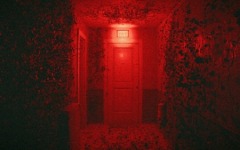
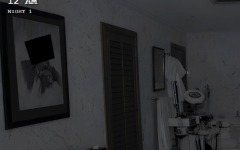
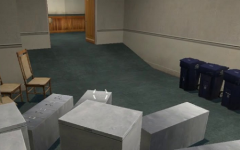
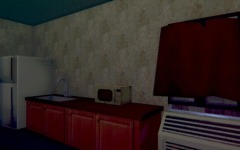
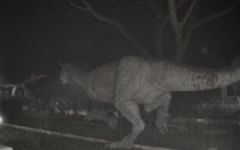
Captured 2 is a first-person psychological horror experience structured around environmental observation and loop-based progression. The gameplay places players inside a confined interior space characterized by repeating corridors and interconnected rooms. Instead of relying on combat mechanics, the design centers on perception, movement control, and interaction with anomalies. Each session unfolds through repeated navigation cycles where environmental consistency becomes the primary reference point for player decision-making.
Loop Structure And Navigation Mechanics
The core gameplay loop involves traversing familiar architectural layouts that subtly change over time. Players move through corridors while scanning for irregularities that indicate anomalies. Movement mechanics are simplified, allowing attention to remain on observation rather than complex control execution. The repeating structure requires players to build spatial awareness and memory of environmental details. Small changes in object placement, lighting, or sound cues serve as signals that influence progression. The absence of direct guidance encourages systematic exploration.
Anomaly Systems And Interaction Flow
Progression in Captured 2 depends on detecting and responding to anomalies embedded within the environment. Players interact with objects, visual distortions, or environmental inconsistencies that alter the loop’s behavior. Tools such as light sources or recording devices may assist in identifying changes. The mechanics emphasize recognition rather than puzzle-solving complexity.
Core gameplay elements include:
- First-person corridor exploration
- Repeating environment structure
- Anomaly detection mechanics
- Object-based interaction systems
- Loop-reset progression model
These systems collectively shape pacing and player engagement.
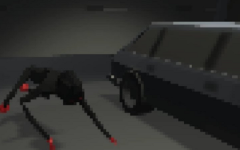
Hostile entities introduce risk within the repeating environment. Their behavior is often linked to proximity, visibility, or player actions. Players must regulate movement speed and positioning to reduce exposure. Survival depends on interpreting environmental cues and adjusting navigation strategies. Failure conditions typically trigger loop resets, reinforcing iterative learning. The design generates tension through unpredictability rather than mechanical difficulty escalation.
Replayability emerges from variability in anomalies and system responses. Since environmental changes are not always consistent, repeated sessions produce different observational challenges. Player progression is tied to improved detection accuracy and spatial familiarity. The loop-based structure encourages experimentation with interaction timing and movement decisions. Captured 2 operates within a perception-focused horror framework emphasizing awareness, adaptation, and refinement of observational strategies across repeated navigation cycles.