-
 Crazygames 2024
-
 Feminization Games
-
 FNAF Unblocked
-
 Play With Friends
-
 Geometry Dash Unblocked
-
 Google Sites Unblocked
-
 GTA Unblocked
-
 Horror Unblocked
-
 Minecraft Unblocked
-
 1v1.LOL
-
 2 Player
-
 ABCya
ABCya
-
 Action
-
 Adventure
-
 Amanda The Adventurer
-
 Among Us
-
 Backrooms
-
 Baldi’s Basics
-
 Bamboozle
-
 Barbie
-
 BeamNG Drive
-
 Best
Best
-
 BitLife
-
 Bleach vs Naruto
-
 Chess
Chess
-
 Chilla's Art
-
 Choo Choo Charles
-
 Creepypasta
-
 Doraemon
-
 DOS
DOS
-
 Driving
-
 Easymath
-
 Evil Nun
-
 Fancade
-
 Farming Simulator
-
 Fighting
-
 FNaF
FNaF
-
 Friday Night Funkin
-
 Friv
Friv
-
 Gacha Life
-
 For Boys
-
 For Girls
-
 For Kids
-
 Garry’s Mod
-
 Garten of Banban
-
 Genshin Impact
-
 Goat Simulator
-
 Granny
-
 GTA
GTA
-
 Happy Wheels
-
 Hello Neighbor
-
 Horror
-
 Hungry Shark
-
 Incredibox
-
 Incredibox Scratch
-
 Indie
Indie
-
 IO Games
-
 Itch.io
-
 Japanese Horror
-
 Jump Force Mugen
-
 Kogama
-
 Lagged
-
 Mahjong
-
 Medical Doctor
-
 Melon Playground
-
 Minecraft
-
 Multiplayer
-
 Multiplayer Unblocked
-
 My Singing Monsters
-
 Nintendo
-
 Old Games
-
 Papa's
-
 PK XD
PK XD
-
 Poki
Poki
-
 Poppy Playtime
-
 Purble Place
-
 Puzzle
-
 Racing
-
 Rainbow Friends
-
 Red Ball
-
 Retro Bowl
-
 Roblox
-
 Sakura School Simulator
-
 Shooting
-
 Skibidi Toilet
-
 Snowmobile
-
 Solar Smash
-
 Sports
-
 Stickman
-
 Summertime Saga
-
 Supermarket Simulator
-
 Survival
-
 Talking Angela
-
 Talking Ben
-
 Talking Tom
-
 That's not my Neighbor
-
 The Amazing Digital Circus
-
 The Baby In Yellow
-
 Play The Pizza Edition Games Online
-
 The Sims
-
 Toca Boca
-
 Toca Life
-
 Touchdown
-
 Unblocked 6969
-
 Play Wobbly Life Games
-
 Retro Unblocked
-
 Sprunki Games
-
 Sprunki Wenda Treatment Games
-
 Stickman Unblocked
-
 Suika Games Online
-
 Unblocked 2024
-
 Unblocked Games 66
-
 Unblocked Games 76
-
 Unblocked Games 77
-
 Unblocked Games at School
-
 Unblocked Games Premium
-
 Unblocked Games World




Advertisement
Cafeland – Restaurant Cooking
Advertisement
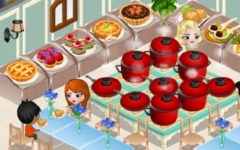
Cafeland – Restaurant Cooking places the player in charge of building a restaurant from a basic setup into a larger food service space. Instead of focusing only on cooking, the game combines preparation, planning, and layout decisions into a single system. Progress depends on how well the player organizes kitchen activity and adapts to growing demand.
From Small Café To Full Restaurant
At the beginning, the restaurant operates with limited equipment and a small menu. As players earn currency, they unlock new appliances, expand the floor area, and increase production capacity. Growth is gradual, requiring multiple upgrades that affect both cooking speed and storage. Each expansion changes how the restaurant functions and allows more complex setups.
Balancing Cooking Time And Output
Every dish in the game has a different preparation duration, which affects how often players need to return and manage the kitchen. Short recipes help maintain constant availability, while longer ones provide higher rewards but require planning. Players must balance these options to avoid empty counters or wasted time.
Core gameplay elements include:
- Mixing short and long recipes for efficiency
- Expanding kitchen capacity with new appliances
- Managing food availability for continuous service
- Increasing storage and counter space
- Adjusting strategy based on production flow
Interior Design And Functional Layout
The restaurant layout is not only decorative but also practical. Players decide where to place cooking equipment, serving counters, and furniture. A well-organized layout improves efficiency by allowing more food to be prepared and displayed. Decorative elements can also be used to personalize the space without affecting core mechanics.
Long-Term Progress And Systems
Over time, additional features become available, including new recipes, special items, and interaction systems. Players can revisit their setup to optimize production or experiment with different layouts. The game encourages continuous adjustment rather than fixed solutions.
Cafeland – Restaurant Cooking offers a management experience that shifts from simple tasks to more structured planning. It focuses on organizing processes, balancing time, and expanding capacity, allowing players to shape their restaurant through ongoing decisions and gradual development.