-
 Crazygames 2024
-
 Feminization Games
-
 FNAF Unblocked
-
 Play With Friends
-
 Geometry Dash Unblocked
-
 Google Sites Unblocked
-
 GTA Unblocked
-
 Horror Unblocked
-
 Minecraft Unblocked
-
 1v1.LOL
-
 2 Player
-
 ABCya
ABCya
-
 Action
-
 Adventure
-
 Amanda The Adventurer
-
 Among Us
-
 Backrooms
-
 Baldi’s Basics
-
 Bamboozle
-
 Barbie
-
 BeamNG Drive
-
 Best
Best
-
 BitLife
-
 Bleach vs Naruto
-
 Chess
Chess
-
 Chilla's Art
-
 Choo Choo Charles
-
 Creepypasta
-
 Doraemon
-
 DOS
DOS
-
 Driving
-
 Easymath
-
 Evil Nun
-
 Fancade
-
 Farming Simulator
-
 Fighting
-
 FNaF
FNaF
-
 Friday Night Funkin
-
 Friv
Friv
-
 Gacha Life
-
 For Boys
-
 For Girls
-
 For Kids
-
 Garry’s Mod
-
 Garten of Banban
-
 Genshin Impact
-
 Goat Simulator
-
 Granny
-
 GTA
GTA
-
 Happy Wheels
-
 Hello Neighbor
-
 Horror
-
 Hungry Shark
-
 Incredibox
-
 Incredibox Scratch
-
 Indie
Indie
-
 IO Games
-
 Itch.io
-
 Japanese Horror
-
 Jump Force Mugen
-
 Kogama
-
 Lagged
-
 Mahjong
-
 Medical Doctor
-
 Melon Playground
-
 Minecraft
-
 Multiplayer
-
 Multiplayer Unblocked
-
 My Singing Monsters
-
 Nintendo
-
 Old Games
-
 Papa's
-
 PK XD
PK XD
-
 Poki
Poki
-
 Poppy Playtime
-
 Purble Place
-
 Puzzle
-
 Racing
-
 Rainbow Friends
-
 Red Ball
-
 Retro Bowl
-
 Roblox
-
 Sakura School Simulator
-
 Shooting
-
 Skibidi Toilet
-
 Snowmobile
-
 Solar Smash
-
 Sports
-
 Stickman
-
 Summertime Saga
-
 Supermarket Simulator
-
 Survival
-
 Talking Angela
-
 Talking Ben
-
 Talking Tom
-
 That's not my Neighbor
-
 The Amazing Digital Circus
-
 The Baby In Yellow
-
 Play The Pizza Edition Games Online
-
 The Sims
-
 Toca Boca
-
 Toca Life
-
 Touchdown
-
 Unblocked 6969
-
 Play Wobbly Life Games
-
 Retro Unblocked
-
 Sprunki Games
-
 Sprunki Wenda Treatment Games
-
 Stickman Unblocked
-
 Suika Games Online
-
 Unblocked 2024
-
 Unblocked Games 66
-
 Unblocked Games 76
-
 Unblocked Games 77
-
 Unblocked Games at School
-
 Unblocked Games Premium
-
 Unblocked Games World




Advertisement
67 Minutes In Heaven
Advertisement
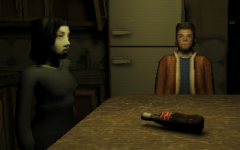
67 Minutes In Heaven is a short first-person narrative game where the player takes part in a confined scenario set during a small social gathering. The story begins with a group activity that places the protagonist inside an isolated area of a house. From that point, the gameplay shifts toward exploration and interaction with the environment. The objective is to understand what is happening and react to events as they unfold within a limited space and timeframe.
Core Gameplay And Interaction
The gameplay is based on moving through rooms, interacting with objects, and triggering scripted events. Players can inspect items, open doors, and activate interactions that advance the scenario. Controls are simple, focusing on navigation and contextual actions rather than complex mechanics. The environment provides cues through lighting, sound, and object placement, which guide the player toward the next step. Progression depends on recognizing these cues and responding correctly.
Decision Making And Outcomes
At certain moments, the player is presented with dialogue or action choices. These decisions influence how the scenario develops and determine which ending is reached. Some choices have immediate effects, while others shape events later in the sequence. The game does not always explain consequences in advance, requiring the player to interpret the situation and decide based on available information. This creates variation between playthroughs.
The main gameplay loop includes:
- exploring rooms and interacting with objects
- observing environmental changes and cues
- making decisions during key moments
- progressing through scripted events
- reaching one of multiple endings
Systems And Environmental Design
The game relies on environmental storytelling rather than explicit instructions. Objects and sounds provide information about the situation and possible risks. There are no complex UI systems; instead, the player receives feedback directly from the environment. Some sequences require quick reactions or correct timing, while others focus on observation. The design encourages attention to detail and careful movement within the space.
Structure And Replayability
67 Minutes In Heaven is structured as a short experience that can be completed in a single session. Replayability comes from alternative choices and different outcomes. Players may revisit the game to explore paths they did not take during the first run. The limited duration allows repeated attempts without long preparation, making it easier to test different decisions and observe how they affect the scenario.